
6 Popular FAQ’s About running records And the science of reading
Running records and the science of reading? Is that even a thing?!? Yes, yes it is!
If you have done much training on the science of reading, you know that in the early years, it relies on the research that shows kids learn to read by sounding out words until it becomes automatic…a process called decoding.
So, how is it that running records, an assessment idea from balanced reading (which does NOT heavily rely on developing decoding skills) could be of use in a science of reading classroom?
I used running records when I was doing balanced literacy and guided reading groups, and I continued to use them after I said “Goodbye” to guided reading and moved to data based reading small groups.
Today we’ll chat about running records and the science of reading: what it is, how I’ve adapted it to be SoR aligned, and how I’m using it to assess and plan reading groups.

What Is a Traditional Running Record?
A running record is a way to record exactly how a child reads a text. Running Records were created by Marie Clay, a pioneer in balanced literacy.
So, wait…I thought this was a post about running records and the science of reading. So why are we talking about balanced literacy?? (Hang on tight, friend!)
The big idea behind a running record is to record what and how a child reads a text. And the thing is…that’s a really great thing even if it did start with balanced literacy! I need to know how kids are reading, and we need a good way to remember how they read the text later in the day when I’m planning more small groups.
In college decades ago, I learned the formal recordings for a running record, which you may have as well. That includes the main problem with running records and balanced literacy: The 3 cueing system.
The three cueing system said that when kids come to hard words they make one or more of these three mistakes:
- They don’t use semantics or meaning (context clues or picture clues) to read the hard word.
- They don’t use syntactical or grammar clues (does it make sense?) to read the hard word.
- They don’t decode the hard word.
The HUGE problem that the Science of Reading uncovered with this is that good readers don’t actually use semantics or syntax to read hard words. That’s a strategy that’s overwhelmingly used with poor readers. Good readers decode.
So… does that mean we throw out running records?
NOPE. This is a case of “Don’t throw out the baby with the bath water!”
Marie Clay was right about one thing: We need a way to record what and how kids are reading. And we need a way to note what they are struggling with so that we can target those skills.

So, What Is a Science of Reading Aligned Running Record?
If I’m being honest, I never really added the cueing errors on my running records in my balanced literacy days anyways because it. was. a. TIME SUCKER!
Instead, I tallied up what their reading sounded like, by making tally marks for correctly read words, and recording the errors.
That made transitioning to running records and the science of reading a lot easier! I do basically the same thing in my data driven reading groups. Tally marks for correctly read words, writing errors over the actual word, and then I record any anecdotal notes about the fluency after I’m finished.

For error words, I just write what the kids said over what the actual word was, like “snell/smell”. In the example above, I wrote, “snell-TA” because after he said, “snell” I gave teacher assistance in decoding that by giving him some kind of prompt.
If they can’t sound it out successfully at all, I write “T” over the word. “SC” stands for “self-corrected.” So, in the example above where I wrote “SC,” Knox read, “”Suff-stuff.” Many of these short hands are from Marie Clay’s original directions for running records because they are STILL helpful, even in a Science of Reading aligned literacy block.
The other main difference is that next to the title of the book, I used to write the Fountas and Pinnell book level, like (A) or (6). But now, I just write the focus skill, like (s blends) or (expression).
How Often Do You Do A Running Record?
Everyone has different views of a running record…I know many teachers who do running records every Friday in place of reading groups or once a week, or only for a formal assessment every 9 weeks. But in my classroom, I do a running record every time I read with a child in guided reading.
Why do a running record every single time? The first reason is because I’m just a creature of habit and I’m more likely to forget or put it off if it’s not part of my regular routine.
Another reason is that the more data the better when it comes to how a child reads.
And the last reason I do a running record every time I meet with a child is because it helps me focus while I’m listening. If I’m just watching and listening to a child read, I’m more likely to daydream or get distracted by kids off task in stations… (just keeping it real, ya’ll!) So recording while I’m listening helps me focus on that one child for that brief moment in time!
My goal is to do a running record with every child in a reading group every time I meet with them. Reality is that doesn’t always happen. Interruptions come, but I would say 90% of the time I’m able to complete a running record on each kid during each group.
When Do You Fit In Running Records?
Like I said, running records and the science of reading are just a part of my reading group routine. When it’s time to read independently, I stagger start my kids’ reading. That means the sweetie sitting in chair 1 starts first. I’ll say something like, “James, you may start reading,” and write the title of the book on his running record card while he starts reading. (Peep the F&P level A from this older example!)

The reason I take the time to write the title on the card then instead of doing it ahead of time is it just seems to give me the right amount of time to space out my kids’ reading.
Then, I have the kiddo in chair 3 start reading following the same pattern. Then, chair 5. Then, chair 2, then 4, then 6.
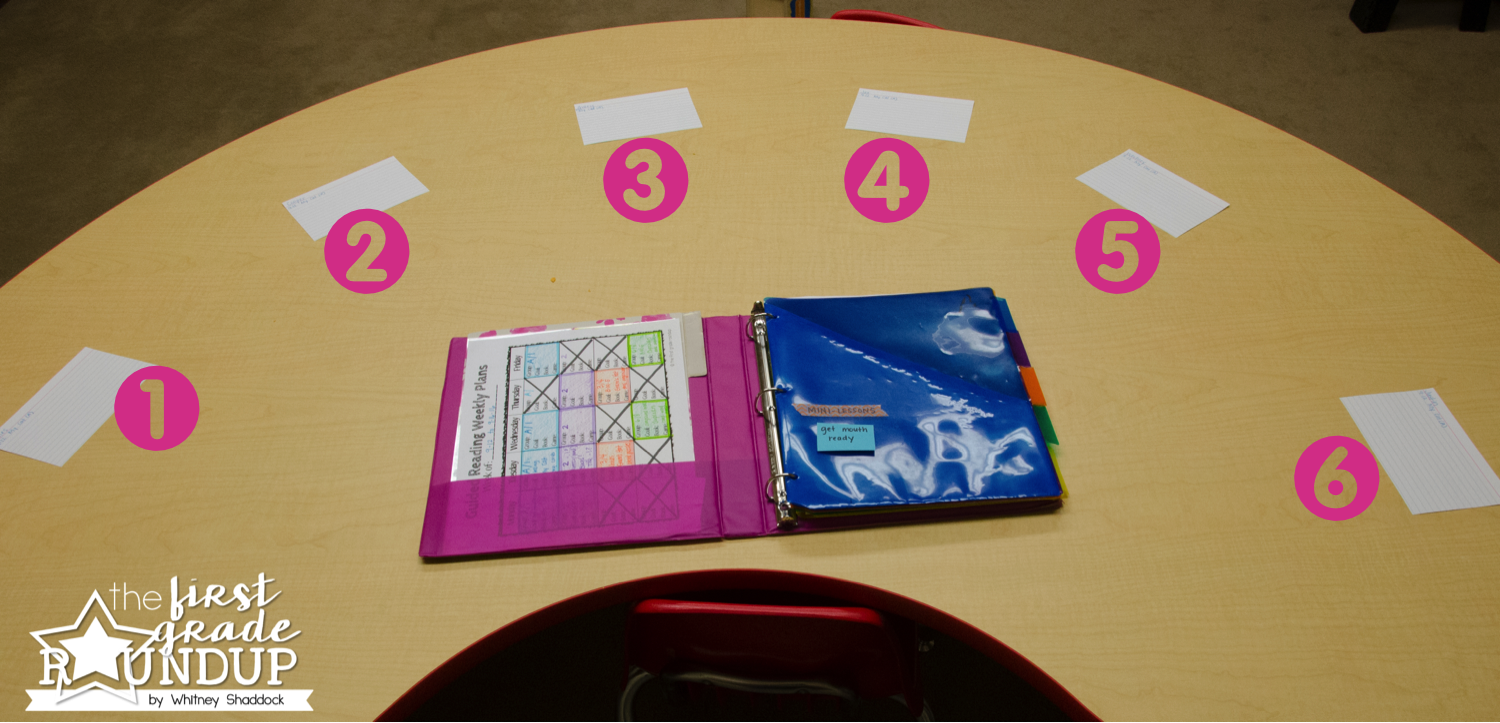
The reason I stagger start my kids’ reading is to keep them from listening to their next door neighbor and copying how they read or those neighbors reading together! Most of the time, that works pretty well!
Once I have everyone reading independently (which takes less than a minute to start everyone), I go back to the first person I started with (chair 1) and listen to that firstie read and I do a running record on the index card. Typically, I listen to at least 2 pages of text (give or take some, depending on the reading level) before moving on to another kid.
How Do You Organize Your Running Records?
I have a 3 ring binder I use for reading groups. Each group has a corresponding colored plastic tab folder. Inside the pocket I store each of the running record index cards for the kids in that group.

This simple, 5 minute preparation, makes sure that all of the index cards I need for a reading group are easy to reach when I meet with them. I can also keep the next book we are reading in that pocket too. This also makes it super simple to move kids around to another group as needed, by simply grabbing their index card and moving it to another folder.
Once the index card is full, I move it to my running records box. I got this index card holder years ago. I love it because it is magnetic and sticks to my teacher desk behind my small groups table. I just hot glued some ribbon to it and added a label to make it a little more attractive!
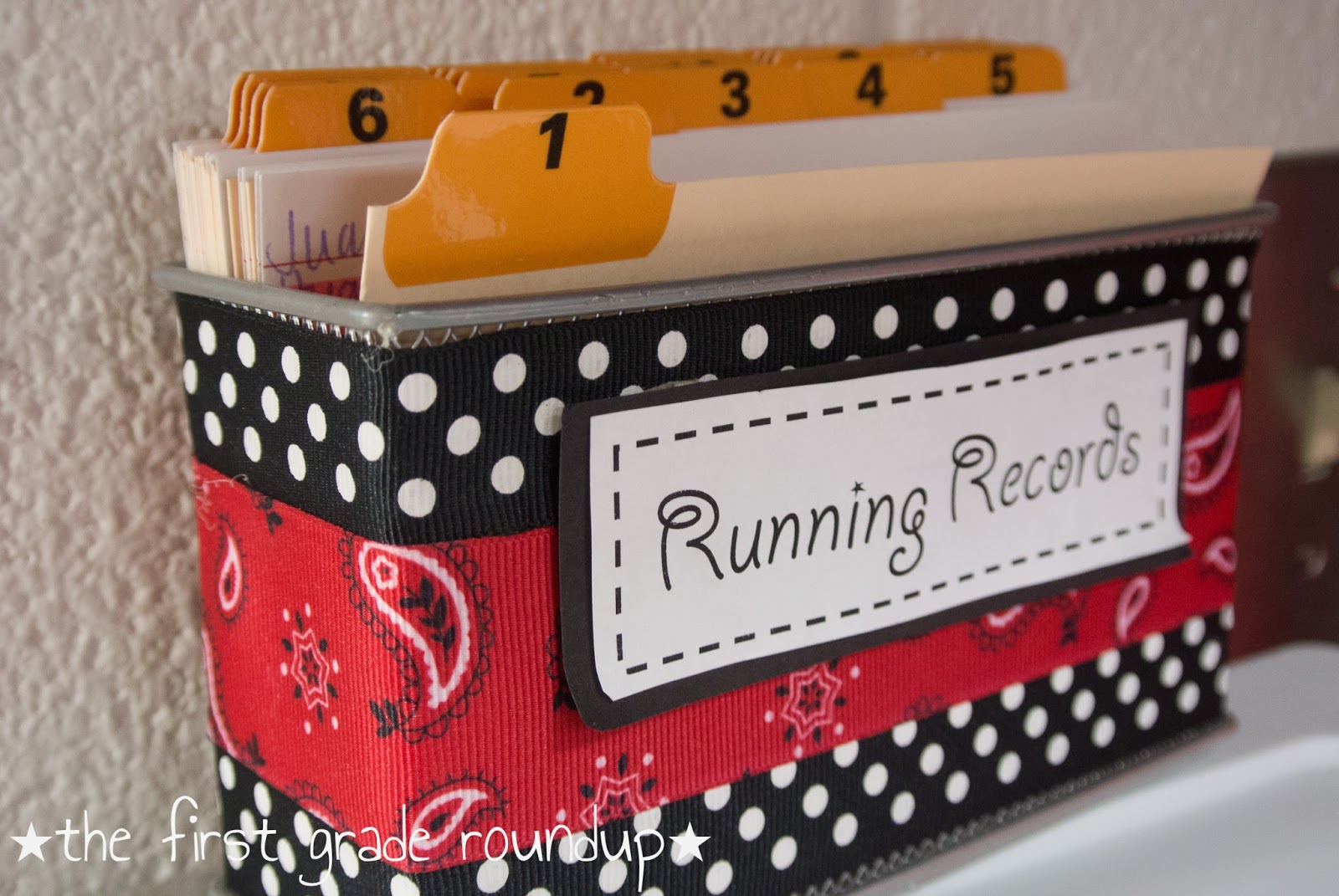
The box has number cards 1-25 and I file full running record cards behind my kids’ classroom number. That way I have all of the running records for the year on a kid in one place–perfect for bringing to RTI Tier 2 intervention meetings or showing parents at conferences!
planning interventions with running Records?
The main thing I do with all those running records is study them. Every night.
Okay, I’m just kidding! 🙂 Honestly, it’s really an in-the-moment data analysis. I jot down any notes on the card that I don’t record (like fluency problems, pacing, etc) and I just do a quick glance at the record to look for patterns before moving to the next kid.
Did he miss mostly sight words?
Did she have problems sounding out words with blends?
Is he just making up a word that follows the beginning sound without reading through the word?
Then, I can plan my instruction for the next time we meet. I usually do an “ugly plan” in the moment on a sticky note on that groups tab folder (so I won’t forget!!)
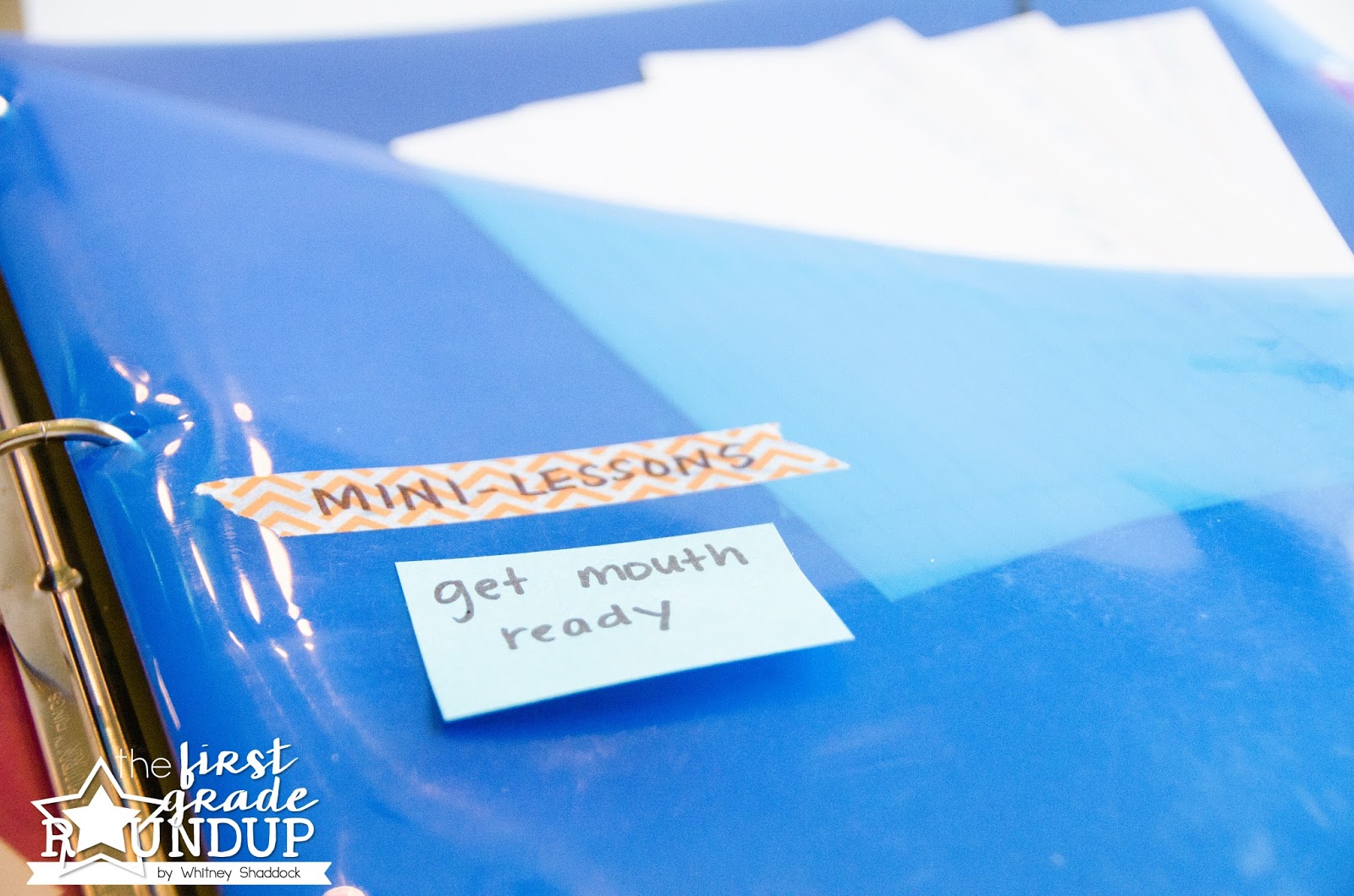
And later, when I have some quiet time, I can go back and adjust my weekly plans for reading groups (find the lesson plan templates in my guided reading packet).
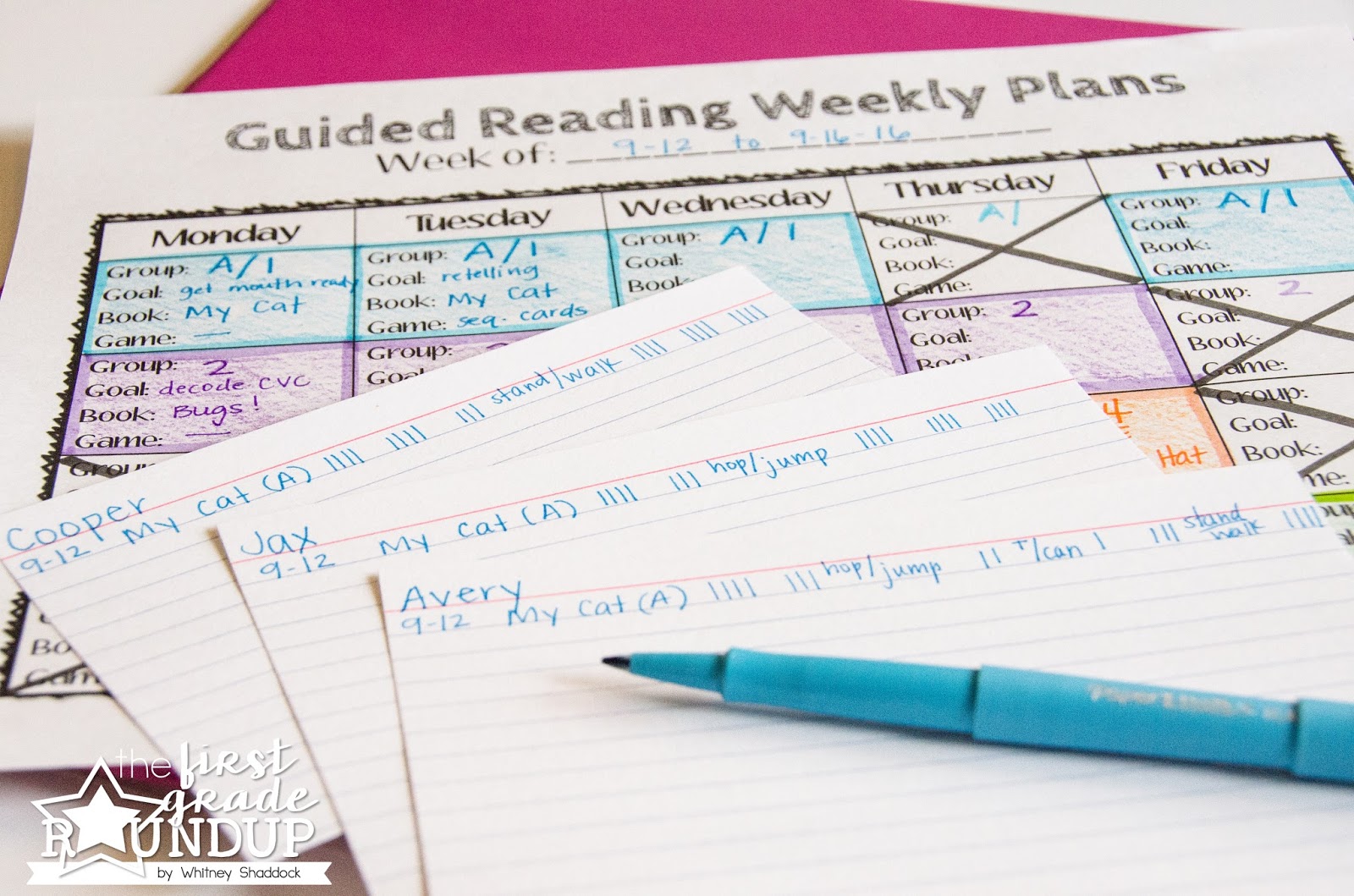
I’ve blogged in great detail about how I plan data driven reading groups if you want step by step details about the entire process from beginning assessments, to planning groups, planning lessons, and modifying and adjusting as you go.
I will always be a big fan of running records and the science of reading. No matter how laborious data collection gets, some data is worth my time to collect!
