
4 STeps To Making kindergarten math Word Problems & Routines A Piece of Cake
For 10 years, I taught first grade and was used to my kids having a year of solving math word problems under their belt. We obviously took it slow at the beginning of the year and gradually moved into our “full-blown” 1st grade math word problem routines.
But when I was asked to fill in for a 12 week long term sub placement in kinder, I knew the routine for kindergarten math word problems would be a little bit different for those babies. I came in January and followed the routines the kinder teacher had started and added to those to get our kinder kids doing “full-blown” math mystery routines in less than 12 weeks.
Kindergarten math Word Problems: Phase 1
In the beginning, when kinders are clueless about how to do school in general, there is lots of hand-holding with kindergarten math word problems. While the end goal is for kids to independently solve kindergarten math word problems and show their thinking all on their own, it takes some work to get there.
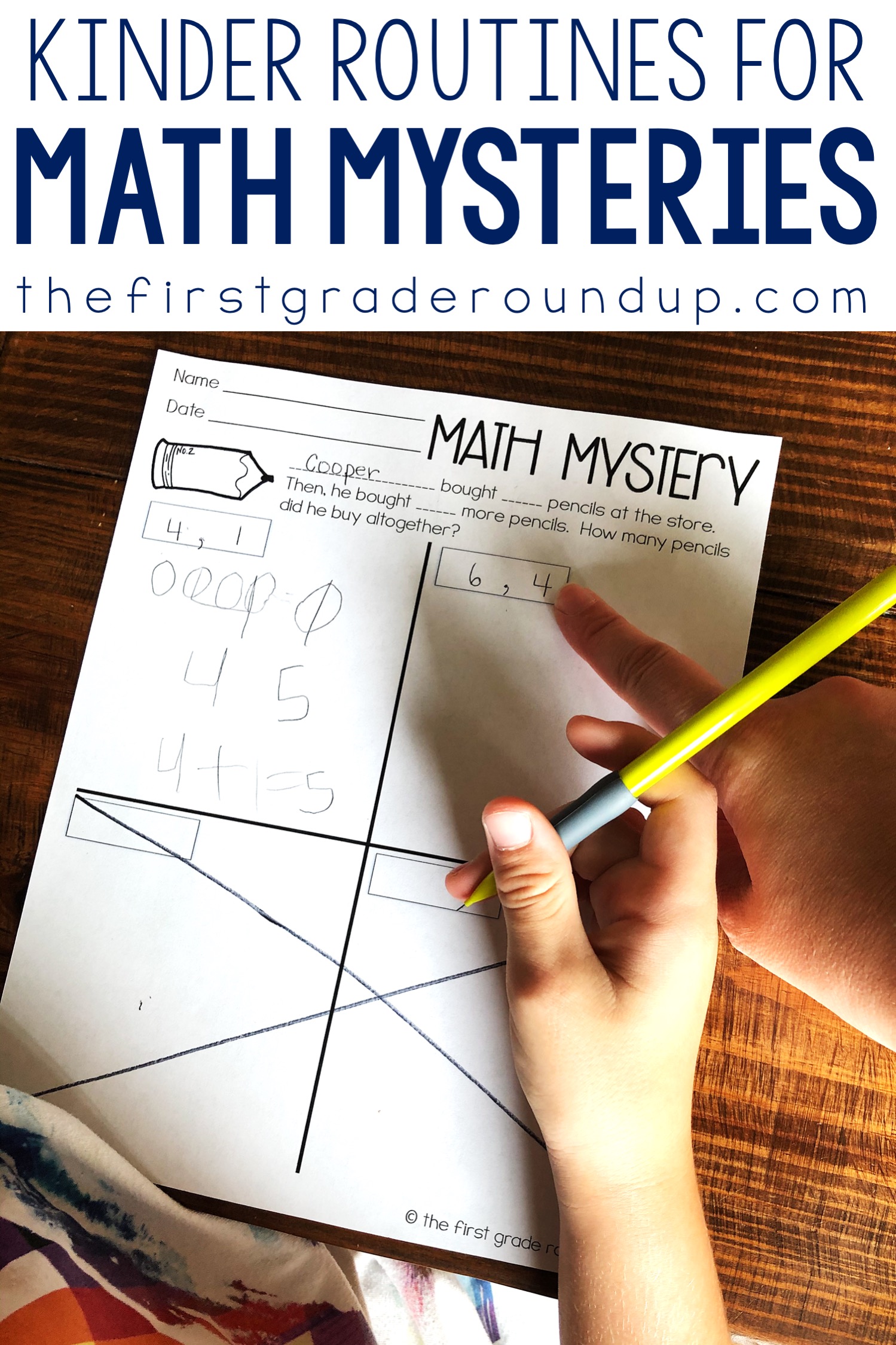
In “phase 1” of kindergarten math word problems, we introduce or launch the story problem just as we normally would. I have the kids get their math brains ready (close their eyes…some put their heads between their knees, ya know…whatever works!) and I read the story problem aloud to them twice. After I’ve read it twice, I say, “Ready?” and they lift up their heads and open their eyes and we are ready to chat about it.
I ask, “WHO is the story problem about?” and they all (eventually…sometimes I have to call on a kid at first) answer the name of the person the problem is about.
Then, I ask, “WHAT is the story problem about?” and they all (eventually) answer with the set, like cookies, crayons, t-shirts, whatever.
Next, I raise my hand so they know to raise their hand to answer and I ask, “What do I know about ____ and her/his _____?” Then I call one kid at a time to tell me one of the two things I know.

In the kindergarten math word problems above, I know that Cooper bought 4 pencils. I also know that he bought 1 more.
Finally, I raise my had again so they know to raise their hand to be called on and I ask, “What is it I DON’T know?”</b > Then, I call on one kids to tell me that. In the problem above, I don’t know how many cookies Cooper has now. I remind them NOT to shout out any answers.
After we’ve launched the kindergarten math word problems, I turn down the lights and dismiss the kids a few at a time to quietly go back to their seats and get started. This is a very quiet time, with quiet thinking music on.
There are only a few times in my day that I ask kids not to talk at all, and this is one of them. It’s important that they can concentrate and get their thoughts together. They are instructed to solve the problem, show their thinking and return to the carpet when the finish.
They sit on the carpet quietly while they wait. I usually have the whiteboard switched over to the Instrumental music video we are playing so they can watch the screens and keep them quiet and calm. This is my favorite instrumental video that I like to use!
As I see kids on the carpet, I go check their work at their table and make notes of what strategy they used with this record keeping tool. If I need them to come back, I call them back from the carpet to conference with them about their mistake or how to show their thinking more clearly.
The total work time for our kindergarten math word problems routine is usually only 5 minutes–maybe 7 minutes max. It doesn’t take long at all, but the important thing is to establish the routine of working quietly and returning to the carpet when they are done.
After about 5 minutes or when all kids have returned to the carpet, we share. Share time is short and sweet, but I walk around to the desks and collect usually two math mysteries to show on the board. Those kids come up, tell us exactly what they did to solve the problem, and then we use star-star-wish to give them feedback.
The star is, “I like how you…” And the wish is “I wish you would have…” 2 stars. 1 wish. In the beginning, this is more teacher led. For example, I had kinders that said, “I like your flowers you drew.” And I would add, “Oh, you like how she drew a picture to show how she counted! Yes! I love that too!”
When we are finished sharing, I read them the kindergarten math word problems with the 2nd set of numbers (I erase the first set inside of the problem and write the new set in with pencil. With my first graders I don’t have to fill in the blanks with numbers, they can look at the sets and usually do that mentally. But my kinders need extra support.)

Then, we go through the exact same routines again. Launch the problem. Send kids back quietly with music. Return to the carpet when they finish solving. Share time. We only do two sets of numbers in this phase. I just X through the bottom boxes before I copy it.

Kindergarten math story Problems: Phase 2
Whoah.
That was a lot of info for phase 1!
But it’s all so necessary to set up important routines for kindergarten math word problems. With our littles, there is no such thing as practicing routines too much, right?
When my kinders have the hang of the phase 1 routine, we go on to phase 2.
The routine is the same for phase 2 in that we…
- Launch the problem
- Unpack the problem (who is it about, what is it about, what do I
know/don’t know?) - Work independently
- Share time
But this time, when the kids finish, they raise their hand. I quickly glance at their strategy and if they have the correct answer, and I can see how they got it, I just tap their hand and say, “You can do level 2.” Sometimes I reread the problem quickly with the 2nd set of numbers since we only launch the problem with the first set. (“Okay, for level 2, Cooper bought 6 pencils and then bought 4 more…)
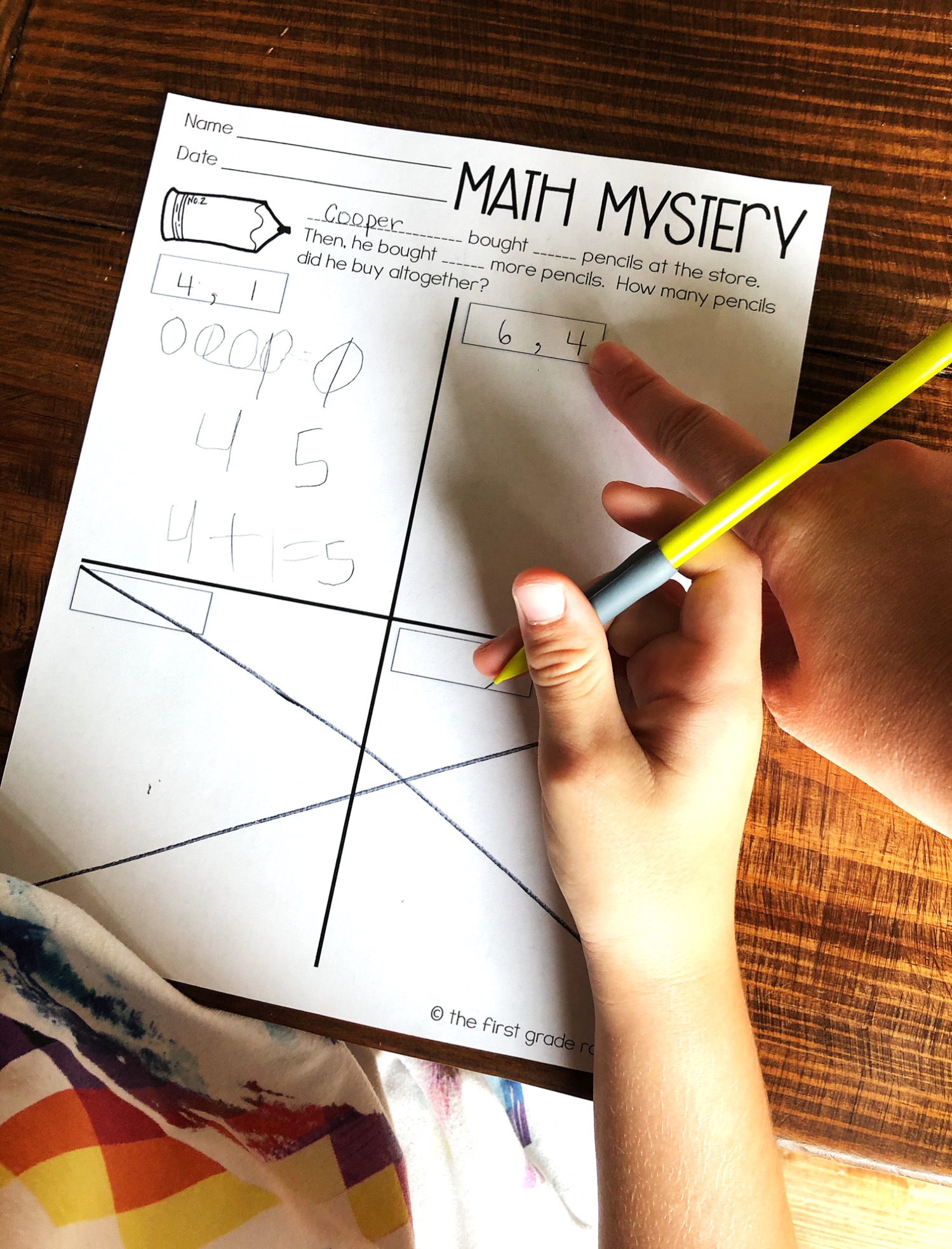
Then, that kid moves on to level 2. If they miscounted or I don’t see how they got their answer, I conference with them about that and have them redo/add to their level 1 work. Then, they can raise their hand again for me to recheck.
When they finish, level 2, they go to the carpet and sit quietly while watching the instrumental music video–just like in phase 1. Again, once most kids are to the carpet, we share. We hang out in phase 2 just long enough for kids to get fluent with the routine.
Kinder math story Problems: Phase 3
Phase 3 is very much like phase 2. The only difference is that I read both sets of numbers in the story problem when we launch and they can move on to level 2 on their own without raising their hand. This just adds more independence.
Once they finish both levels, they go to the carpet and wait…just as before. As I see kids on the carpet, I look over both of their number set levels and call them back if I need to conference with them. If not, they can stay on the carpet until it’s share time.
So, if that’s the only difference, why can we just add that in with phase 2? Because, the key to establishing a successful routine with kindergarten math word problems taking baby steps. Phase 2 is training them do 2 levels without needing a share time in between.
The purpose of phase 3 is to encourage them to self-check their work and decide independently when they are ready to move on to the 2nd set of numbers. It also helps them handle talking about two different sets of numbers.
Kindergarten math Word Problems: Phase 4
Phase 4 is where we land and it’s where my kinders really start LOVING math mystery time!
The difference in this step is adding more challenging number sets so they are solving 4 number sets each time.
I set up our challenge numbers as something super exciting, and make it where they WANT the hard numbers. When we launch the problem and I read through the first two number sets, I then write on the board what the two challenge numbers will be. They LOVE watching me write the challenge sets and setting goals for which color sets they want to get! 🙂
I color code the challenge sets with two different colors. One color set (like pink in the photo below) is harder than the other color.
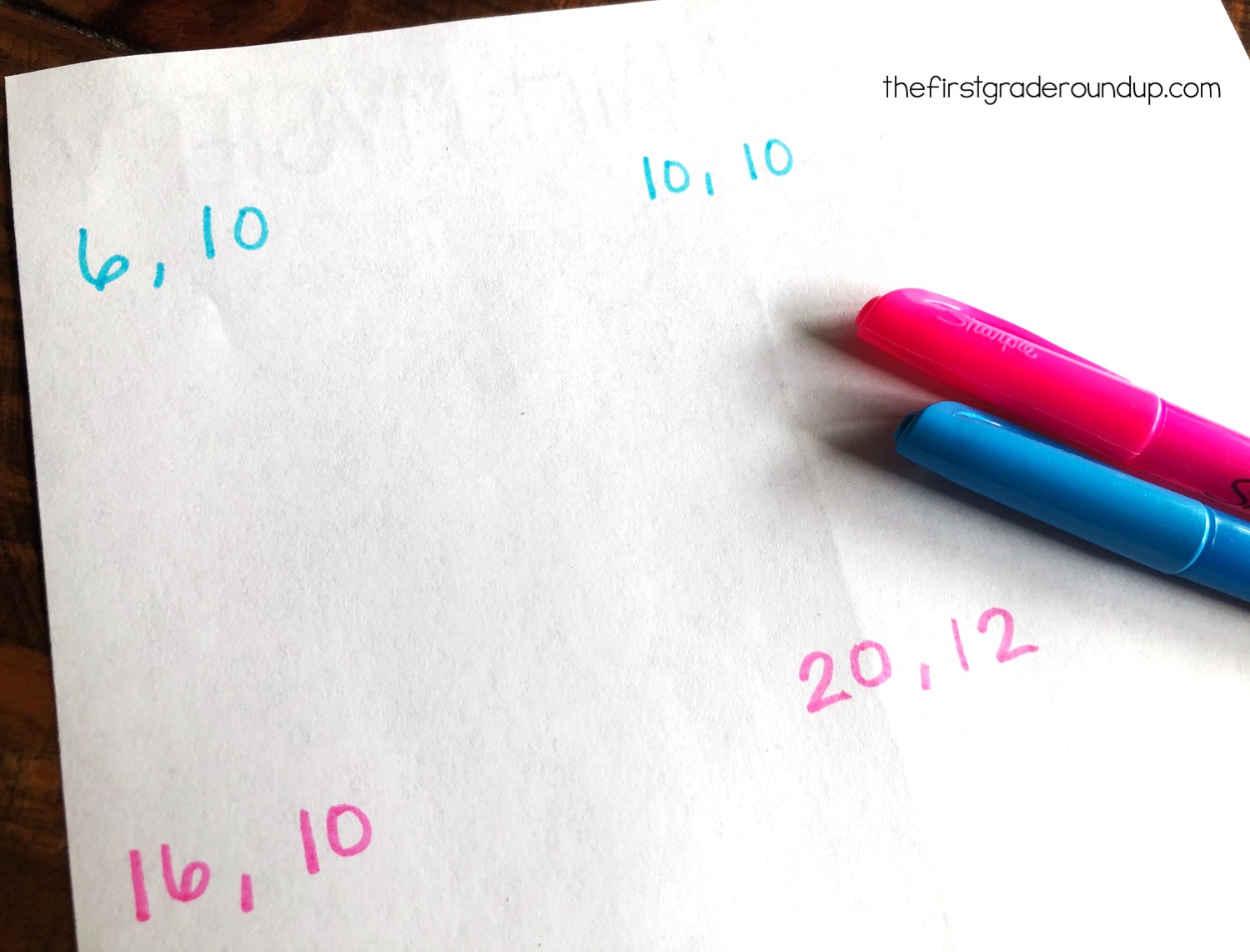
How do I choose the 2 challenge number sets? The first regular set of numbers are within 10 (the kinder standard). The second set of numbers are within 20 or within 10 still depending on my kids. So for the challenge sets I think about two “groups” of my kinders who might typically be my early finishers. Usually I have on grade level or just above grade level kids that are early finishers and then a group of kids well above grade level.
So based on that, I would make a blue set of numbers (like in the example below) for those on or just above kids and a red set for my well above kids. When they are on the carpet, and I know to check their work, I also use their work as information to know which number sets they should do.
As time goes on, you may find you need to add a third set of numbers that are just more on-grade level number sets for kids that commonly discount.
templates for kindergarten math word problems
These are the templates I use for kindergarten math word problems. I used the same ones in 1st grade as well. All I do is add names into the story and write in number sets in the top two boxes.
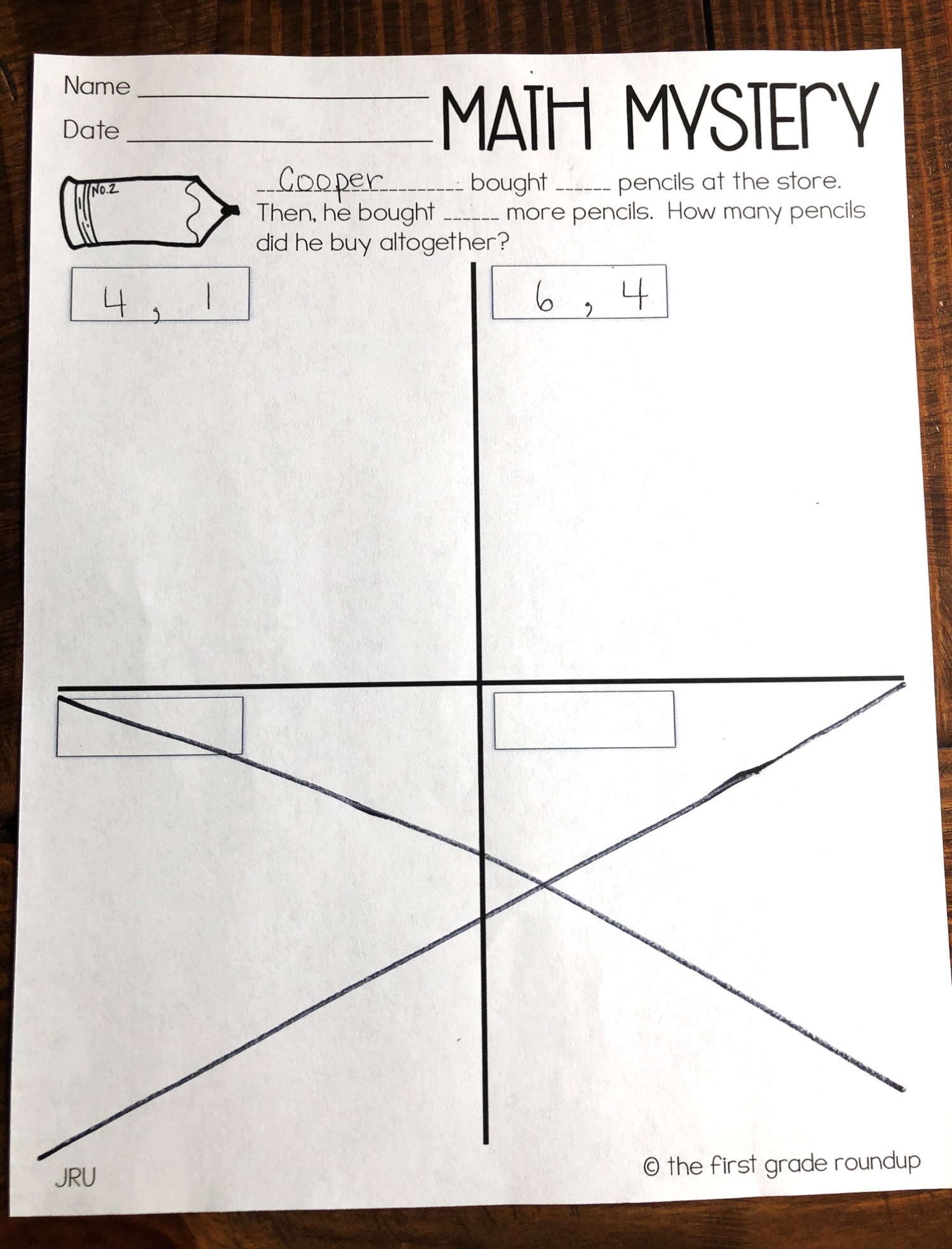
In kinder, I leave the bottom two boxes blank. Those are for the challenge sets we use in phase 4! 🙂 Once they are ready for a challenge set, I have them “Do the blue sets in the bottom boxes.”
You can find the free sample of kindergarten math word problem templates here. You can find the year long bundle here.

