
using non-fiction features in informative writing in kindergarten & 1st grade
To use my Arkansas lingo, we are “smack dab” in the middle of our Animals Unit, which means we are all about using non-fiction features in informative writing in kindergarten and 1st grade during writers’ workshop.
I’ve blogged some about the graphic organizers I use to teach informative writing in kindergarten and first grade, but I wanted to give some love to some other anchor charts that are super important in my room during our non-fiction writing units!
What are non-fiction texts?
We have been studying non-fiction texts and their text features during our whole group reading time and charting what makes non-fiction texts…non-fiction! 🙂

Then, we started noticing and charting non-fiction text features. We added a new non-fiction text feature card as we learned and read about them in our non-fiction texts. We went on a scavenger hunt for non-fiction features during our whole group reading time.

Using Science Read Alouds to Become Experts
As we read and researched animals and our human body during our Science Squeeze {aka…teeny tiny block of time dedicated to science….can I get an amen???}, we recorded topics that we became “experts” in so that we would have a class list of topics we could write to teach about!

After spending some time on our non-fiction graphic organizer during our whole group writing lessons, we focused on teaching our readers just like authors teach us in non-fiction texts!
How do Authors Use Non-Fiction Text Features in their writing?
We used the science texts we had used as a science read aloud, but this time, we just breezed through the text to notice and observe how the author used non-fiction text features in her informative writing book. We charted the elements we saw in this “How to Teach Readers” anchor chart.

Each day I taught a writing mini-lesson focusing on one of these points from the How To Teach Readers anchor chart. We also connected each strategy to the text features we are studying during our whole group reading time.
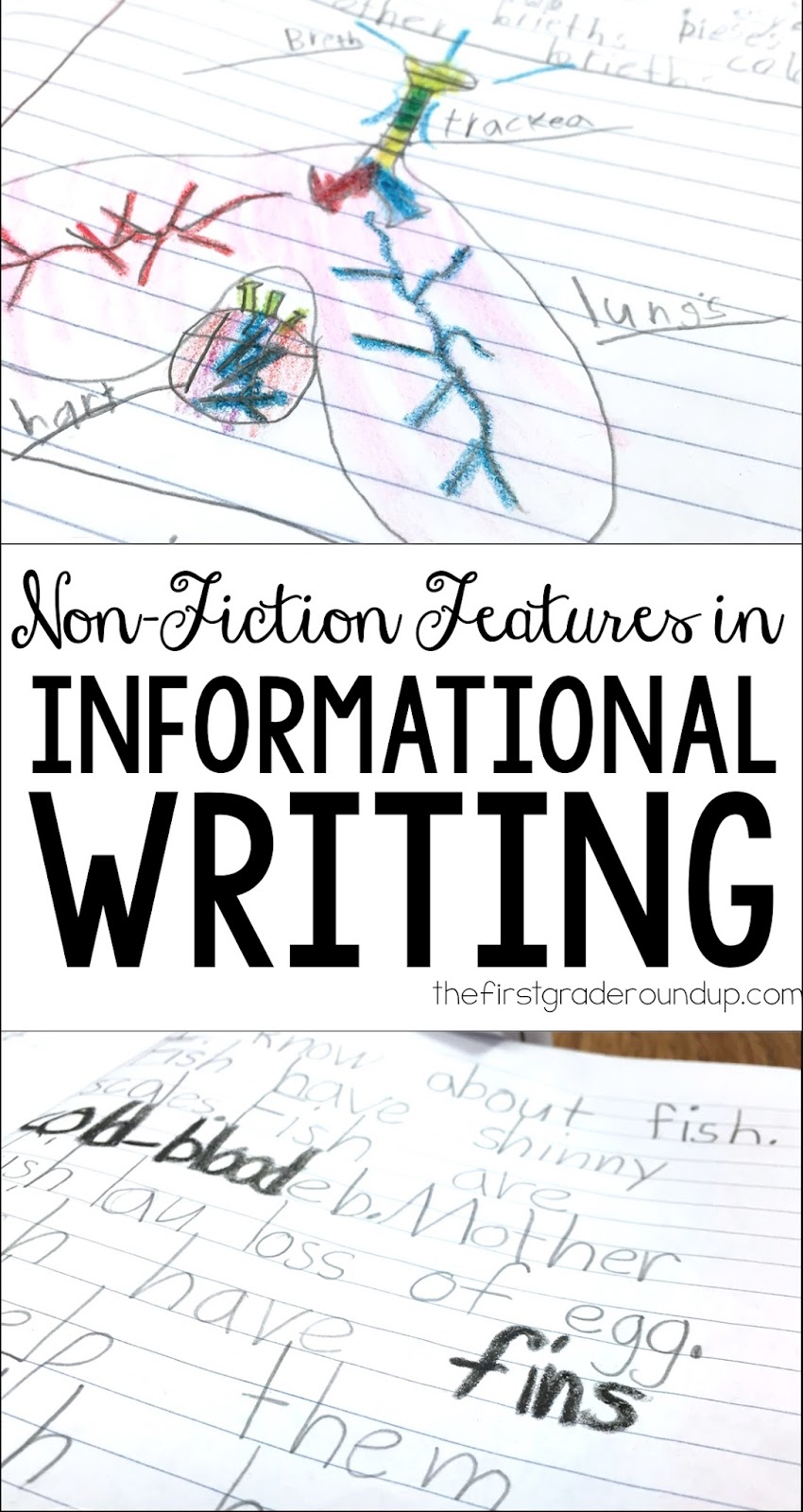
Let’s take a look at each feature from the anchor chart and how kids incorporated those non-fiction text features into their informative writing in kindergarten and first grade.
Diagrams & Labels in Informative Writing
We teach with diagrams and labels because non-fiction authors use those text features….

bold text in Informative Writing
We make our smart words (what we call academic vocabulary words) bold print because that’s how non-fiction authors get us to notice their smart words…

We also charted smart words as we researched birds this week to get some practice listening for and picking out smart words from a source! It’s easy to do when you are looking at the text because of bold print, but it’s much harder when you are just listening or watching a video!
First graders easily confuse a smart word and a fact sentence, so this practice was really, really good helpful for my firsties!

twin sentences in Informative Writing
And the last strategy…We write twin sentences because non-fiction authors use those to help define and teach us more about the bold printed, smart words…

I modeled writing using that strategy and then we practiced independently. During our writing share time, I chose students to share who showed the non-fiction text feature strategy we focused on for the day! And they are really catching on! Using real non-fiction text features during writers’ workshop really has a way of engaging kids because it makes them feel like the “real” authors they are!
These informative writing lessons are from the writing portion of my Animals Unit and that packet includes anchor chart templates as well as detailed daily and weekly lesson plans for informative writing in kindergarten and first grade.
