
Math Games for 1st Grade with Decomposing Tens and Ones
The past several months, I’ve been a long-term sub in kindergarten for a girl on maternity leave. And this little space has suffered just a bit. #realtalk
But I’m back today and blogging about one of my favorite decomposing numbers math games for decomposing tens and ones with 2-digit numbers. We’ll talk about how to play Roll, Build, Break, and how I modified this decomposing tens and ones game for kindergarten when we were working with teen numbers!

What Materials Do I Need?
I love Roll It, Build It, Break It because it gives hands on meaningful practice for an idea that is so necessary for kids to understand before adding or subtracting 2-digit numbers.
But also? It’s very easy to do “on the fly.” In first grade, I could pull out this game when another lesson was bombing or if I needed a last-minute sub plan idea. It’s easy to play, and I guarantee you have everything you need right in your classroom!
All you need are dice, Unifix or pop cubes, and a recording sheet or dry-erase board!
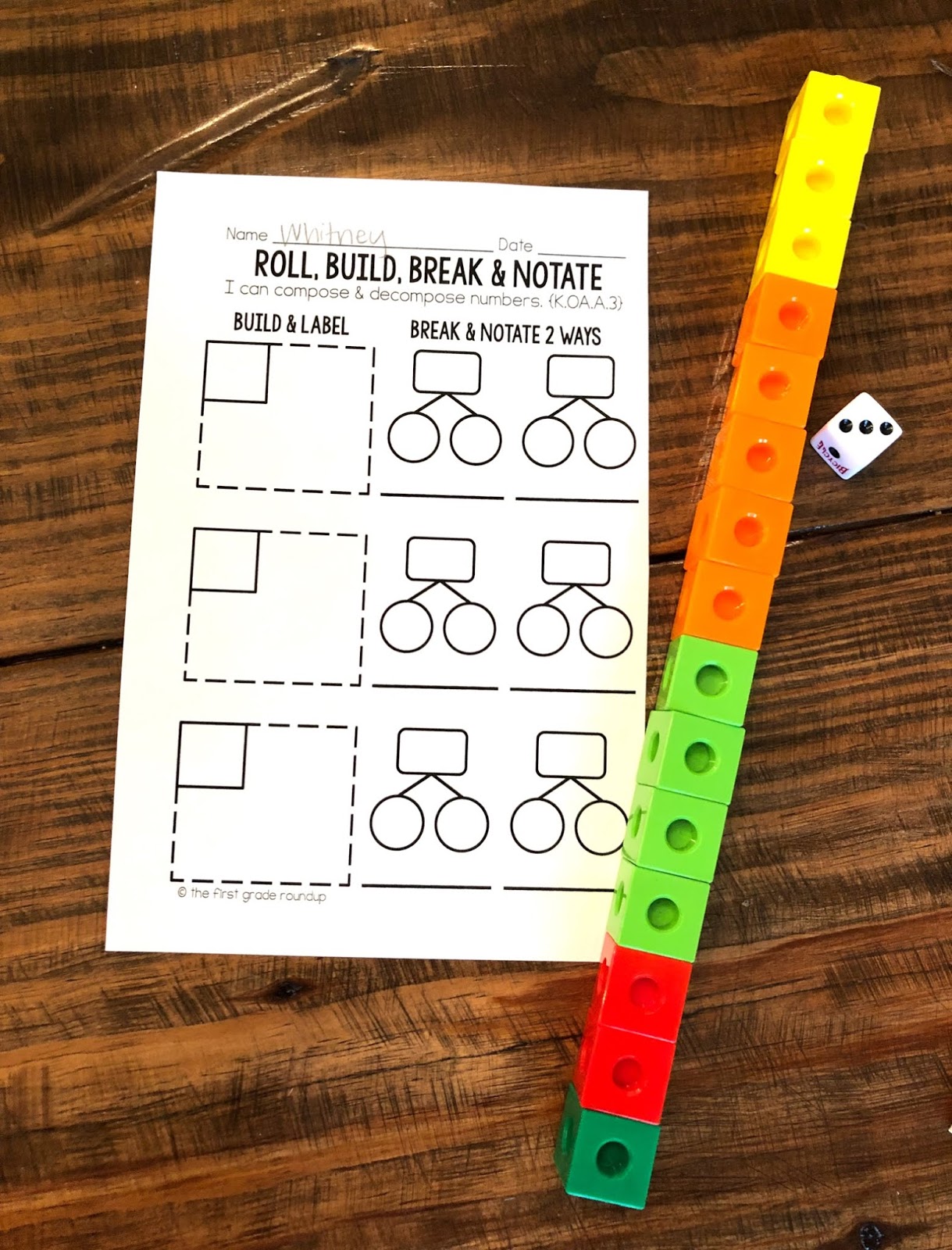
This decomposing tens and ones game can be played independently, with partners, or as a whole group. I love the flexibility of this game and I love that it’s one I can give my kids choice on if they want to play with a friend or alone.
How Do I Play?
Let’s chat about the basic game rules for decomposing 2-digit numbers (first grade version). Students roll one or two dice at a time. Each time they roll, they build a cube tower by adding that many cubes. For example, if I roll a 6 first, I put six cubes together. Then, if I roll a 3 next, I’ll add 3 more cubes to my tower.

Have students roll a set number of times (usually 10 to 20 times is a good number). Sometimes it’s easier to lay it flat with so many cubes!

Once kids have rolled the set number and built their tower or train, it’s time to break the tower or train into groups of tens. Students will find and break as many groups of tens as they can and leave the remaining ones.
The kids LOVE doing this and almost have no idea that they are actually working on decomposing tens and ones! #winning

Then, they will count the tens and ones to see how big their train was. Finally, they will record their number by writing the numeral and drawing the tens and ones on their dry erase board or recording sheet.
How Can I Differentiate This Game?
If you have struggling counters, have them just use one die or roll fewer times.
In kindergarten, we used this for decomposing teen numbers into 10 and some more. We played whole group so that I could make sure we were building a teen number. I rolled the dice on our projector and the kids added the cubes to their train. When we got to a teen number, I had the kids break the cubes to find a group of ten. Then, we counted the number, “10, 11, 12, 13, 14, 15, 16.” We wrote the numeral together on dry erase boards and then I had them draw a picture of the tens and ones on their boards.

For your strong counters, have them roll 30 times before breaking, and then have them find groups of 100s after grouping the tens.
You can find the directions, I Can cards and recording sheets in my Primary Math Games Packet. And you can also find this game’s lesson plan in my full year of first grade Guided Math Workshop Lesson Plans!

