
Routines for Sentence building Puzzles in the K-2 Classroom
Do you use decodable sentences in your primary classroom? These sentence building puzzles are one of my favorite ways to reinforce fluency and language skills for all primary kiddos, especially ELLs, in productive group work, literacy stations or centers, and in reading groups. Plus, it’s aligned with the science of reading!
Here is the routine for how I used these decodable sentence puzzles in my first grade classroom.

How Do We Do Decodable Sentence Building Puzzles?
The goal of decodable sentence puzzles is simple: Read to put words in order to make a complete sentence.
The first thing I always have kids do is read each of the words to practice decoding fluency skills. We do this together if we are using it in a small group or whole group. Or they read them on their own if they are doing in literacy centers or group work.
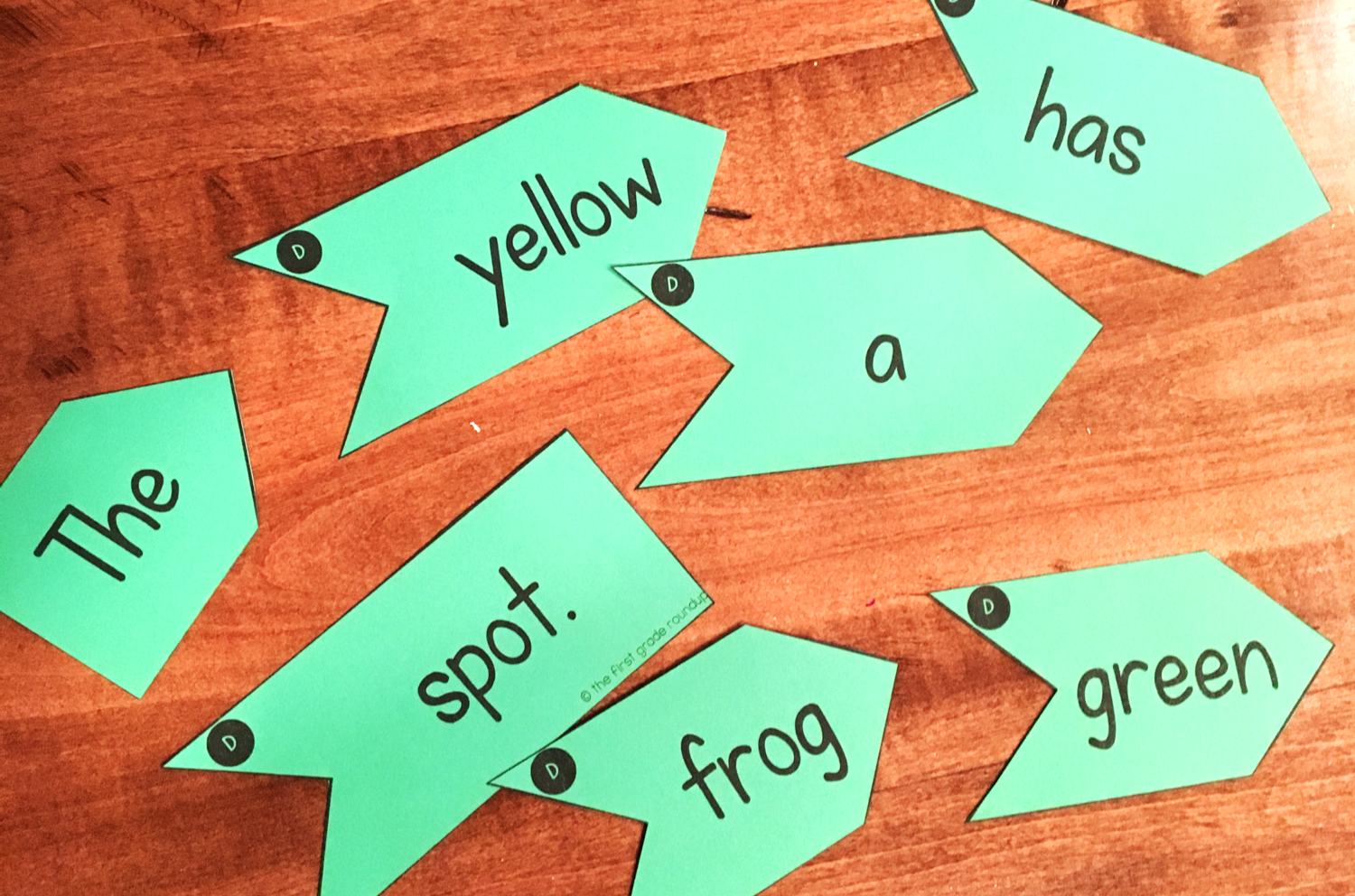
Next, kids simply order the words to make a sentence. There is some natural support with the puzzle, meaning the kids should be able to figure out the first and last word just because of the straight edges (and hopefully the capital letter and punctuation!) But the other pieces are exactly the same shape. This was super important to me because I wanted kids actually reading the words, not just trying to make the pieces fit together.
Last, I ask kids to reread the sentence to self-check. This forces them to read for comprehension and gives ELL kids an opportunity to hear our language structure out loud.
Once they have checked their sentence, they write it on our recording sheet for group work or literacy stations and then illustrate the picture to show comprehension of what they read.

In productive groups, I love doing a carousel activity with these. We choose “on grade level puzzles” and put a different puzzle at each station. Then groups of 2-4 kids rotate through each station for 2 minutes each and order the puzzles and record them on their recording sheet. Anything where we are up moving around and practicing literacy skills is a win in my book! 🙂
Why Do We Do Decodable Sentence Puzzles?
With these sentence building puzzles I can reach all of my kiddos:
- My good readers who need to practice fluency with high frequency and decodable words.
- My readers who struggle to comprehend as they read
- My ELL sweethearts who struggle with our language structure and need practice with grammar and syntax.

On top of the sentence puzzles challenging all of my kids academically, it’s also engaging for kids.
Whether it is being used as a reinforcement or review activity or a language sequencing exercise, my kiddos LOVE these sentence building puzzles! They are engaging, they are fun, and they are easy to self-check!
But what about those emerging and non-readers? Level A and B sentence puzzles are the same patterned sentence for each level. So that kids can just practice concepts of print (think: What is a word? What is a sentence? Where is the beginning and end?), one-to-one correspondence, and language and oral comprehension skills.
You can even modify these by leaving the sentence stem, “It is a…” together instead of cutting each word apart. Then, kids just need to order the last two words that have picture support. **NOTE: for these kids, the focus is more on language structure and concepts of print, not decoding the words.**


You can do your own sentence building puzzles using index cards or Magnetiles, or you can snag this pre-made differentiated packet of decodable sentence building puzzles that are leveled, color-coded and ready to go!
