
5 Important Tips For 1st Grade Reading Group Organization (that Are SOR aligned!)
Last week, I blogged about why I said goodbye to guided reading.
But that doesn’t mean I gave up on small groups altogether.
So, if not guided reading for literacy intervention, then what? Data driven groups. That’s what.
But what does our reading group organization look like? Is it a complete 180 from guided reading? How much relearning am I really gonna have to do here? (Pssst: not much. It’s really much easier than you’d think!)

Let’s chat about data-driven reading group organization. I’ll walk you through a sample class data set. We’ll talk about how I assess, set up groups, plan for them, and what my schedule for meeting with kiddos looks like!

Assess the Standards
In traditional guided reading, the first thing we did was test our kids’ reading level, right? In data driven reading groups, we also assess first!

But data driven reading groups, I assess the standards, not reading levels. To make it simple, I started with the assessments my school already required: Acadience (formally, DIBELS) and PAST.
K-1 Acadience (DIBELS) takes care of letter naming, segmenting sounds, decoding CVC words and Oral reading. And it’s FREE!
PAST takes care of phonemic awareness. Beginning in 2nd grade, the MAZE (part of Acadience) addresses some comprehension portions of reading. And it’s FREE!
As a kinder teacher (at the time I started data driven groups), those were all of the assessments I needed. And I was already doing them.
Record the Data
Once I’m finished assessing my kids, I record the data.
I use this digital data wall to assess a kid and then type it in on my laptop. This digital template is already set up for first grade with the DIBELS and PAST benchmarks already listed. But it is easy to edit for the grade and assessments you are using.

Then, after I’m finished assessing, I go back and color code my data for at risk (very below), low risk (bubble kids), on grade level and above.

Reading Group Organization By Data Points
Now, I’m ready to group my kids for better reading group organization.
I print out the grouping pages that I need from my Reading Group Organization resource. These three pages shown below are the ones I’ll be walking through in this post. You can find tons of different grouping pages here.
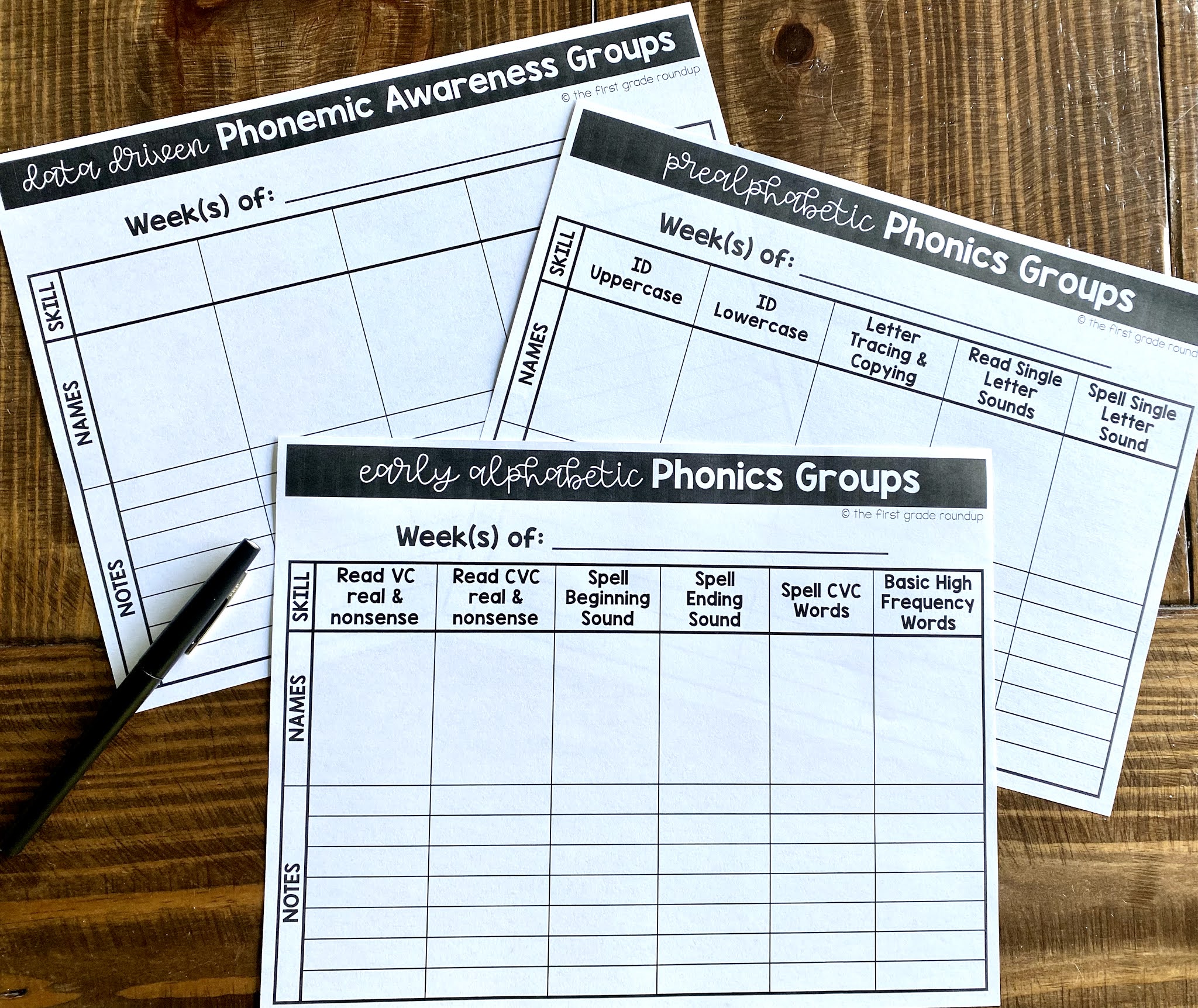
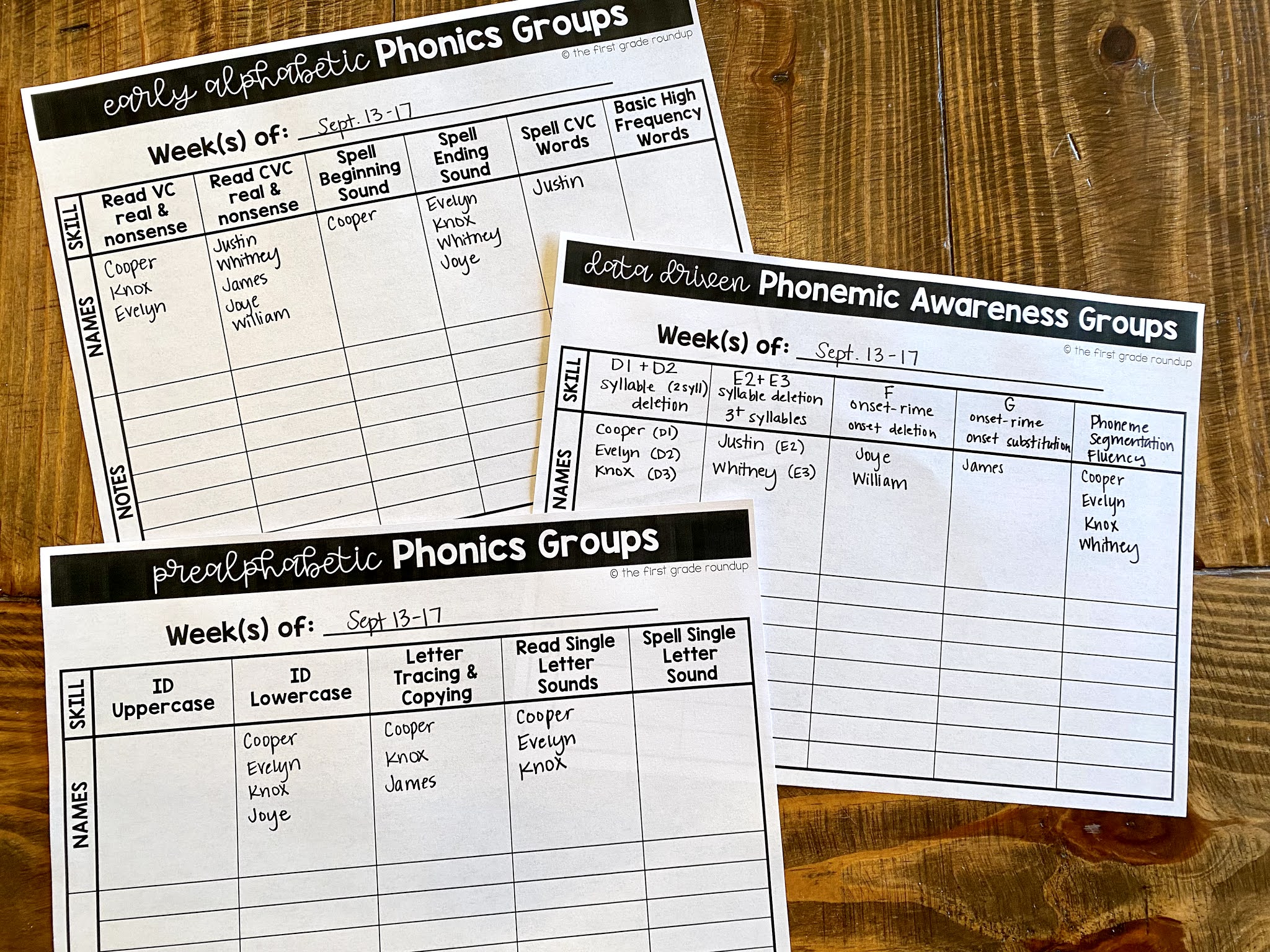
For my phonemic awareness groups, I printed out a blank page because all of the skills I need to address were on multiple pages…so I’m just saving paper! In the top category boxes, I wrote in each skill from PAST that I need to address with at least one of my kids in my sample class. Then, I wrote the names of the kids for each category.
Notice that for the PAST, kids are only in one category…the stage they are currently working on becoming automatic at. Also, notice I combined D1 & D2 and E2 & E3 because they are very similar and both skill groups were very small. When I do this, I just note which subskill each kid needs to focus on so I can do that individually in the group.
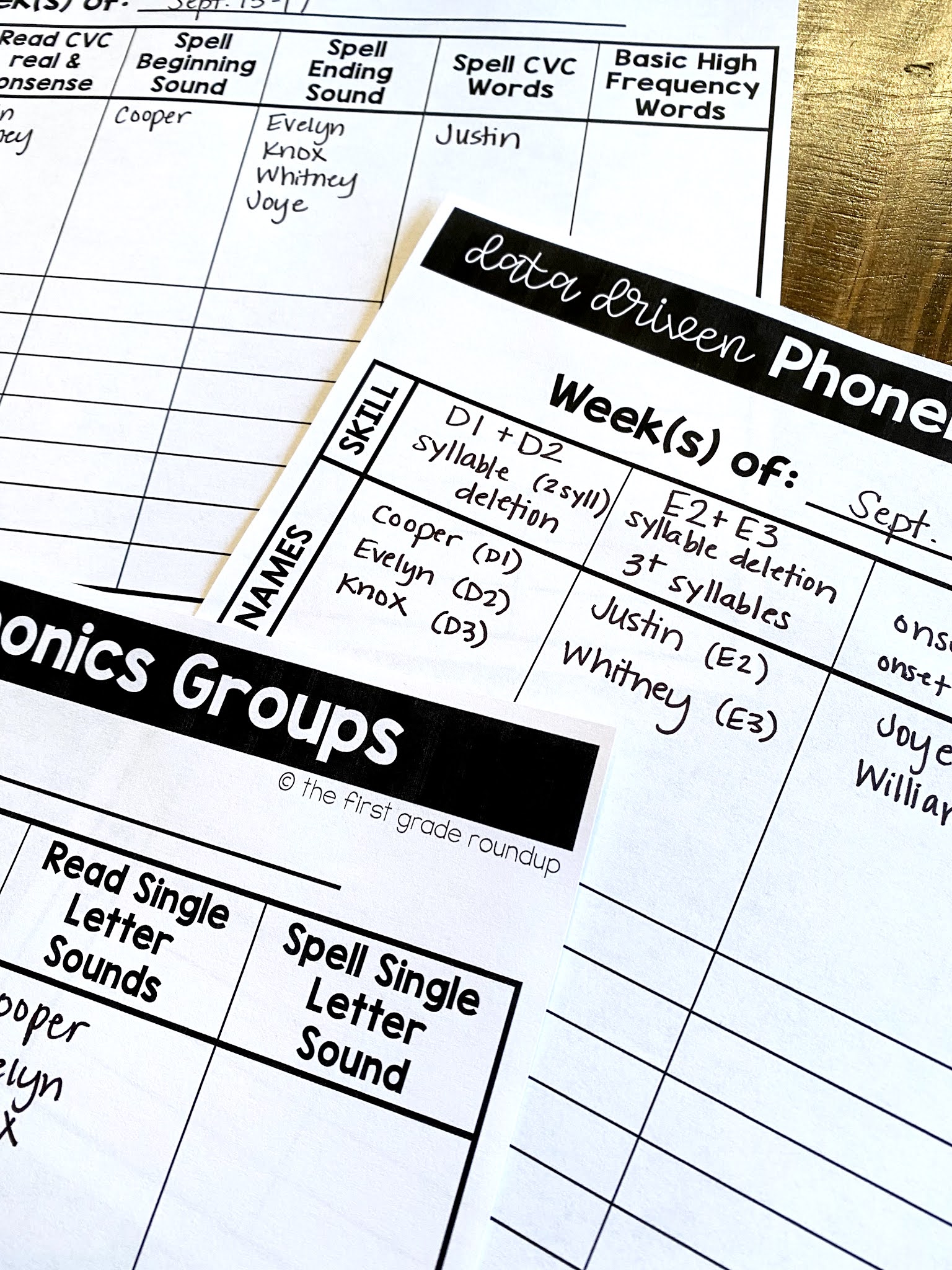
For my phonics groups, I had some pre-alphabetic readers and early alphabetic readers. Not all of the skills need to be addressed with my kids, so I’ll only use the columns I need. Again, I wrote down the kids’ names under EACH category they need help with. Notice that for phonics, they may be in multiple categories.
I will not put kids in two of the same type of subcategories though. For example, I will not have a kid in the read VC and read CVC columns even if they can’t do both of those, because they need to first focus on VC, then I can move them to CVC. But I could have a kid in read VC and spell beginning sounds, because those are different types of sub skills–decoding and spelling.
I also have oral language and comprehension group pages as well that I can add kids to. Often times, my oral language kids are my ELL kids or low language kids. I can add those kids based on their ELL level or anecdotally as I notice oral language skills that need more work.
I want to make sure every kid is in a group. If not, I need to consider what extension groups I could offer for those kids. This is often where my comprehension groups come in. And for those kids with great comprehension, we work on writing their comprehension skills, like writing a retelling of a story, etc.
Now that I have my kids listed in groups, I’m ready to plan!
Plan the Lessons
Once I sort out my groups, the planning starts. This is where this reading groups organization system becomes much, much simpler than guided reading. I look at each skill group and ask myself…
What content should I plan for this skill? I preplan my list of words or letters we will work on for the week.
What supplies do I need to work on this skill? For many groups, I will want some manipulatives like colored blocks or felt squares for my phonemic awareness groups. Dry erase markers, marker boards….anything that I would need for those groups.
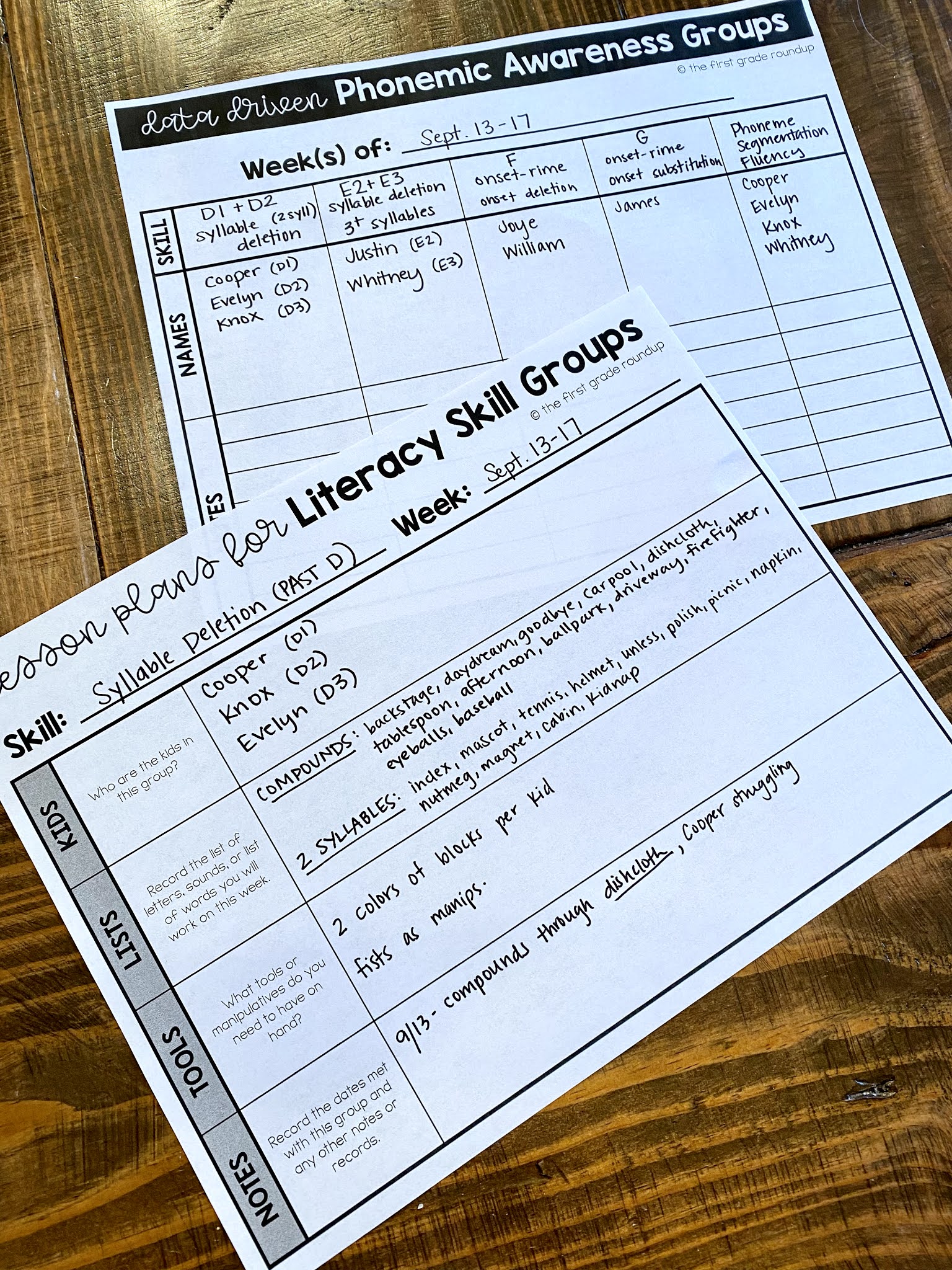
I can add all of this information to my lesson planning pages and add them to my small group binder. Now all I’ll need to do is open up to our lesson plan and get started!
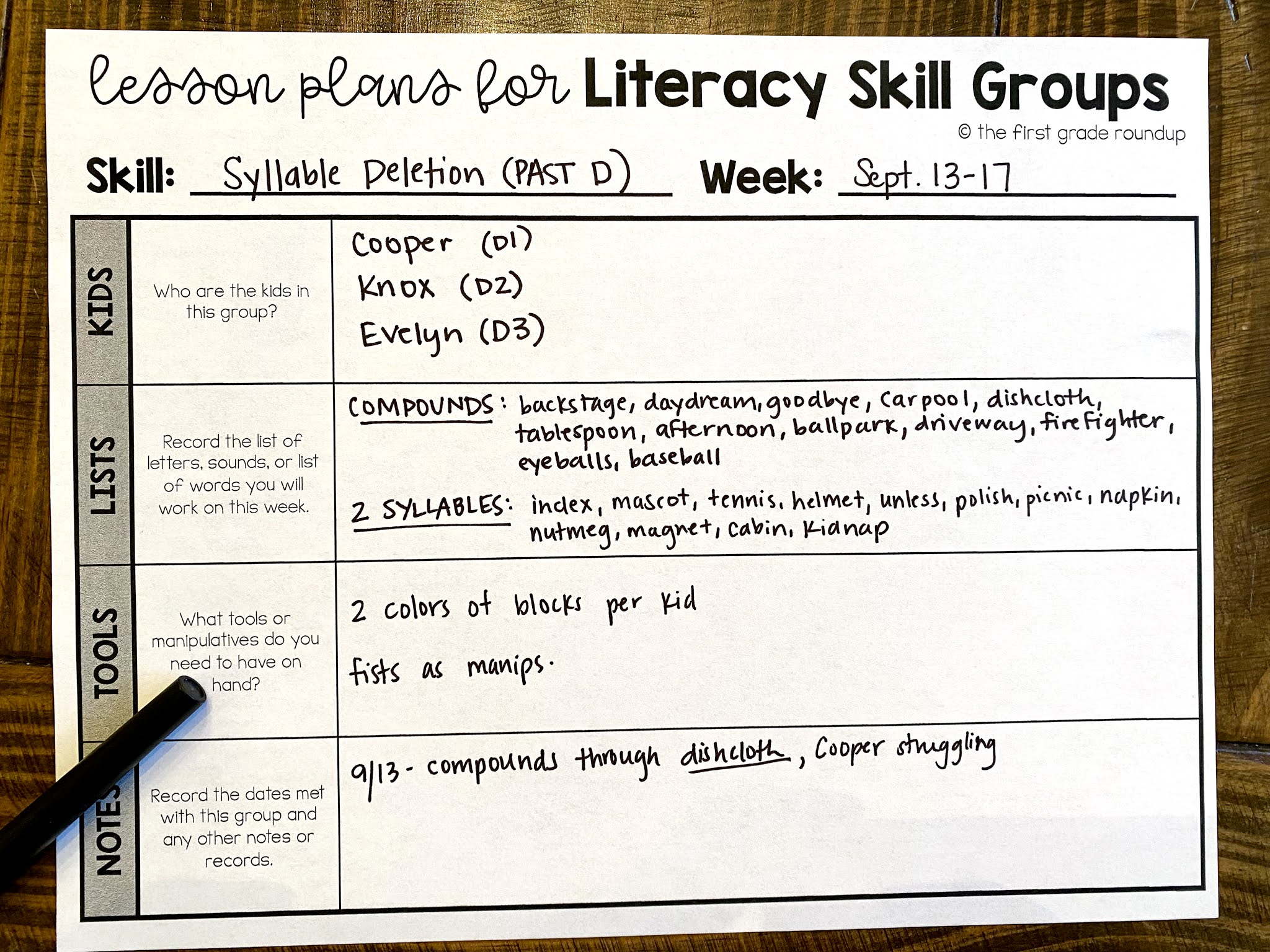
As a side note….the lesson planning page is basically the longer version of the groups page. You do you. 🙂 Fill out both or just one!
Meet With Kids
Remember stressing over your schedule with guided reading? In my head, I was like, “Ok, 2 groups a day, but I have 5 reading groups. 2 of my groups need to see me every day, but that won’t work. Can I manage to just meet with my highest group once or twice a week. Wait, what about my bubble kids?” Am I right??
This is the main thing I LOVE about switching my small group mindset to data driven groups. There is no schedule. No really.
For those of you who know me in real life, I know you are shocked. Because I LOVE me a schedule.
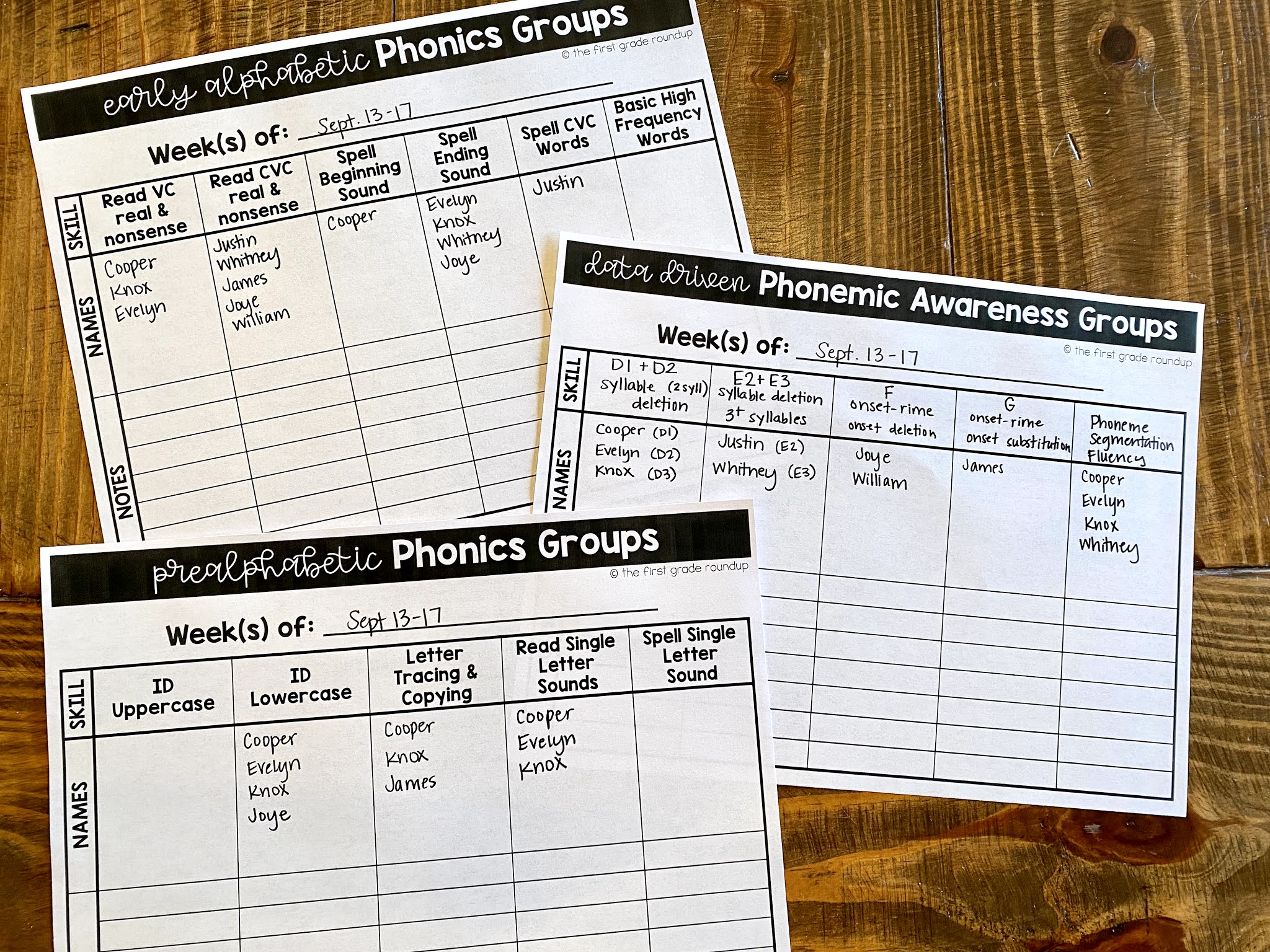
But these planning pages became my “schedule.” Or, more accurately, my checklist.
So, how does that work? I just simply go in order and use those columns like a checklist.
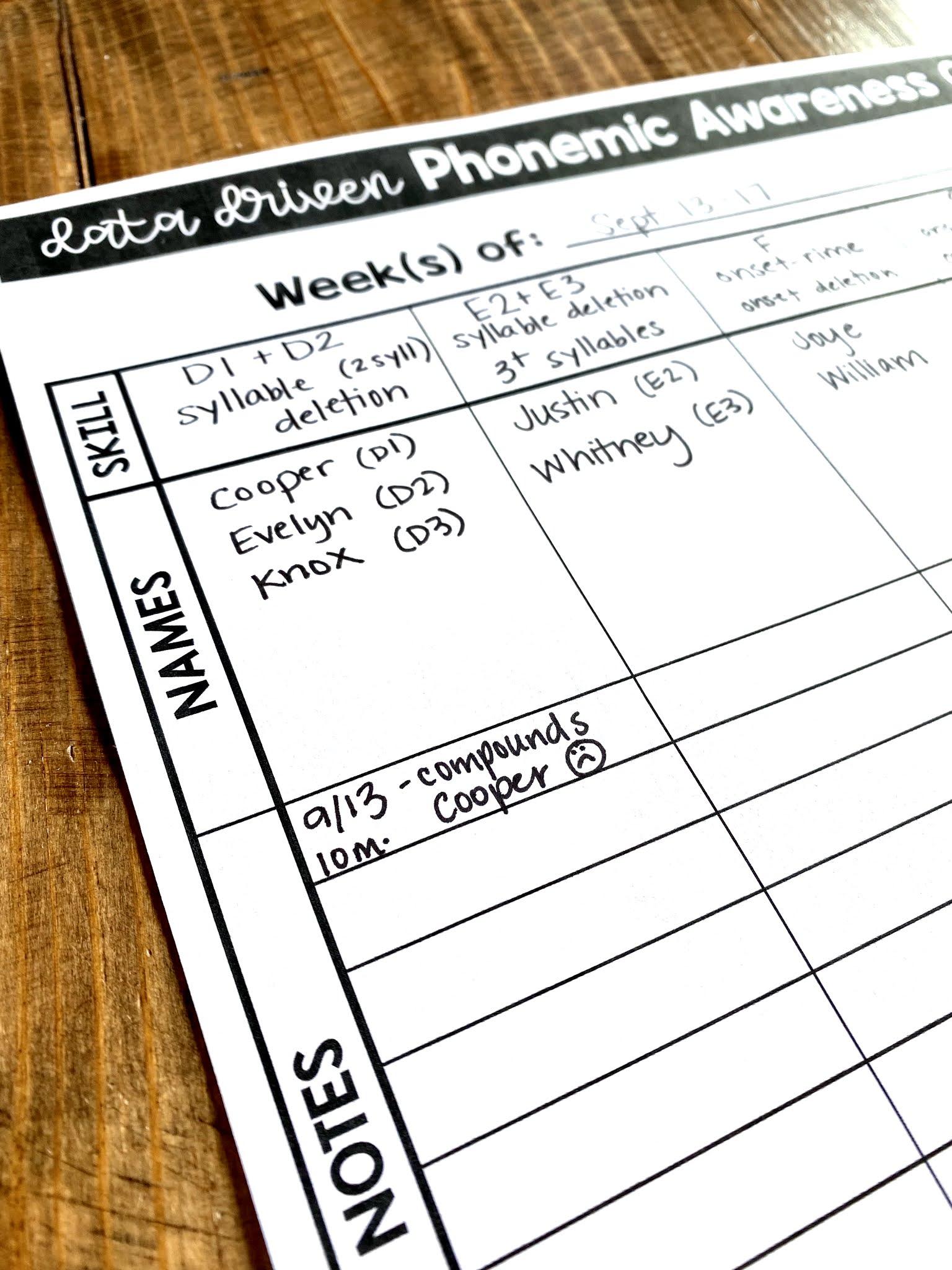
In this sample class, I would start with my Phonemic Awareness Groups and meet with the PAST level D group. Then, I would add the date we met (and minutes if needed for RTI) and any notes I had.
As soon as I finished that group, I would call the next group, and so on.
For these skill groups, they are short. Sometimes just 5 or 10 minutes. So I can fit way more groups in than the old school guided reading groups.
My main focus for small group time when I was in kinder was during their center time. I pulled during centers time and I didn’t just pull one group per center. I just called a group back and moved on through the groups, switching centers with my timer, not based on when I finished a group.
The other **fabulous** thing about this system of reading group organization is because they were so short, I was able to meet with them throughout the day, not just during centers. If I had it together one morning, I could pull a group during morning work.
Or while kids were finishing up their writing work. Any part of my literacy block where I had a “free” minute where I didn’t need to walk around and monitor kids, I could pull groups.
Once I make it through all the groups, I do it all over again.
On average, I was able to get through all 20 of my groups in kinder at least once a week. But that doesn’t mean I only met with each kid once a week. In my sample class we’ve been using, that would mean that my highest kid, “William” would be met with twice a rotation and my lowest kid, “Cooper” would be met with 7 times per rotation.
Want to use all the Reading Group Organization Things?? You can find them here!

