
Parts of the body activity – life size human body collaborative posters
We are continuing our First Grade Animal Groups Science Unit on the human body and animals. The kids already love this first grade science unit, but who am I kidding? I knew they would!
This week we are doing build-a-human body collaborative posters with organs and important parts of the body. This fun, parts of the body activity helps first graders learn how our bodies work to keep us alive and what we need to survive and thrive.
Here’s a quick look at how we use these highly engaging human body collaborative posters to learn all about the parts of the body!
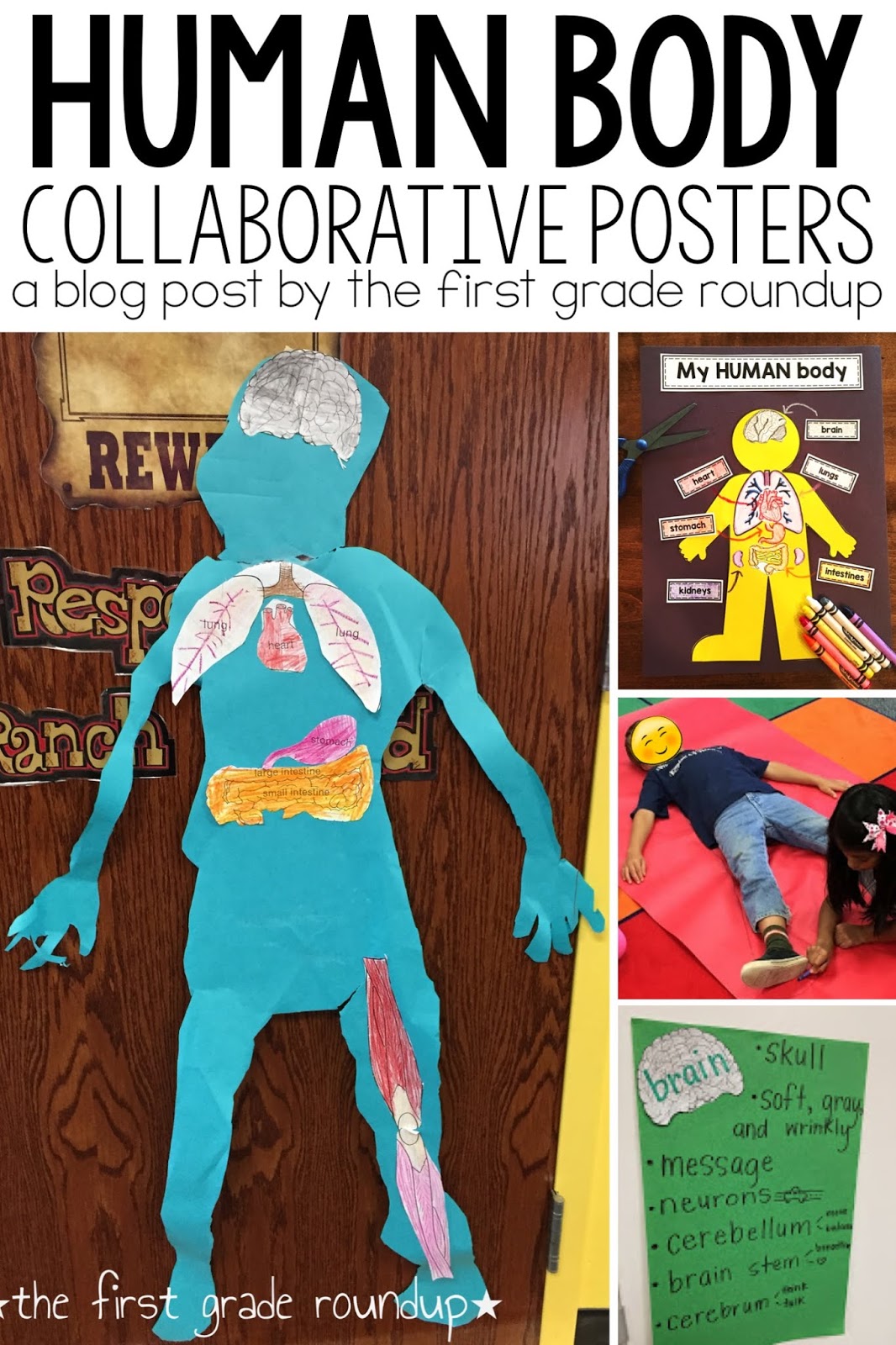
trace the human body
First, I grab large pieces of butcher paper in a variety of colors. I like for each group to have a different color so that their human body collaborative posters are easy to find.
On the first day, we read a short overview book about our bodies. Then, they select a human body to trace! Listening to all of the silly giggles while they were tracing and cutting was seriously so fun for me! I love watching my firsties love learning!

The kids cut out the body after it’s been traced and then I help them post the human body collaborative posters somewhere around the room. I have table groups work together on these so I try and post the human body as close to their table group as possible.

This is the last thing we do on the first day of our human body collaborative posters.
parts of the body shared research
The following days we focus on one part of the body each day. Shared research is the first step! We read a non-fiction human body book that focuses on the specific organ or part of the body we are learning.
As we read the human body book, we record our learning on an anchor chart and review the facts about that organ or part of the body. We chart the digestive system and 6 other parts of the body and/or organs: brain, heart, muscles, lungs, and kidneys.


This part is usually done during our writing time because we work on informative writing during this parts of the body activity. We read the book, do the shared research, and then we use this shared research to write an informative paragraph about each organ or muscle.

Color, Cut, & Paste
Our informative writing and shared research is done during our writing block in the morning. So, that same day, during our first grade science block in the afternoon, our table groups work together to color, cut, and glue each organ or muscle on their human body collaborative posters.
Check out the fun details one group added with the capillaries on their lungs.

“Mini-me” human bodies
After the groups color, cut and glue their part of the body on their life size human body collaborative poster, they get out their “mini-me” parts of the body activity and color, cut and paste the small sized part of the body we learned about for the day and add the label!

What I love about this process is the multi-layered learning: a non-fiction read aloud, shared research to process the learning as a group, informative writing so kids can independently process the information, collaborative group work to diagram the human body and then independent practice with the “mini-me” to reinforce the diagram of the human body.
And let me tell you guys… those firsties KNOW how to build a human body when we are finished!
You can find all of this parts of the body activity in this human body science activities resource which is part of this Animal Groups Science Unit for first grade!

