
3 Meaningful Dr. Seuss writing lessons for first grade poetry writing
We are back from our February break and celebrating Dr. Seuss Week in first grade!
Of course, I have my favorite Dr. Seuss writing lessons and activities that I do every year, so I will not rehash those again.
This year, I added a few new Dr. Seuss writing lessons. We focused a little more on the characteristics of Dr. Seuss’ writing. Here are our top 3 ways to write like Dr. Seuss!

1. Creative Writing
Dr. Seuss is famous for his creative and imaginative writing! We introduced this idea by reading and studying his imagination in books like, To Think That I Saw It On Mulberry Street, If I Ran the Zoo, and The Cat in the Hat. Because let’s face it: You have to be a creative writer to come up with some ideas like that! We then did our own creative writing in our journals by writing about what it might be like if WE ran the zoo or what would happen if the Cat in the Hat visited OUR house!
It wasn’t fancy….just plain ole journal writing…but they turned out so so cute! In fact, I wish I would’ve had them write it on the “cute” writing prompt paper from my Dr. Seuss Writing Lessons Packet because I would’ve loved hanging these in the hallway!

2. Wacky Words
One of my favorite things about reading Dr. Seuss books is his love for wacky words! You just can’t help but giggle when he writes them! This year, we read a few of his books like Mr. Brown Can Moo, Can You? and One Fish, Two Fish, Red Fish, Blue Fish to listen for wacky, nonsense words.
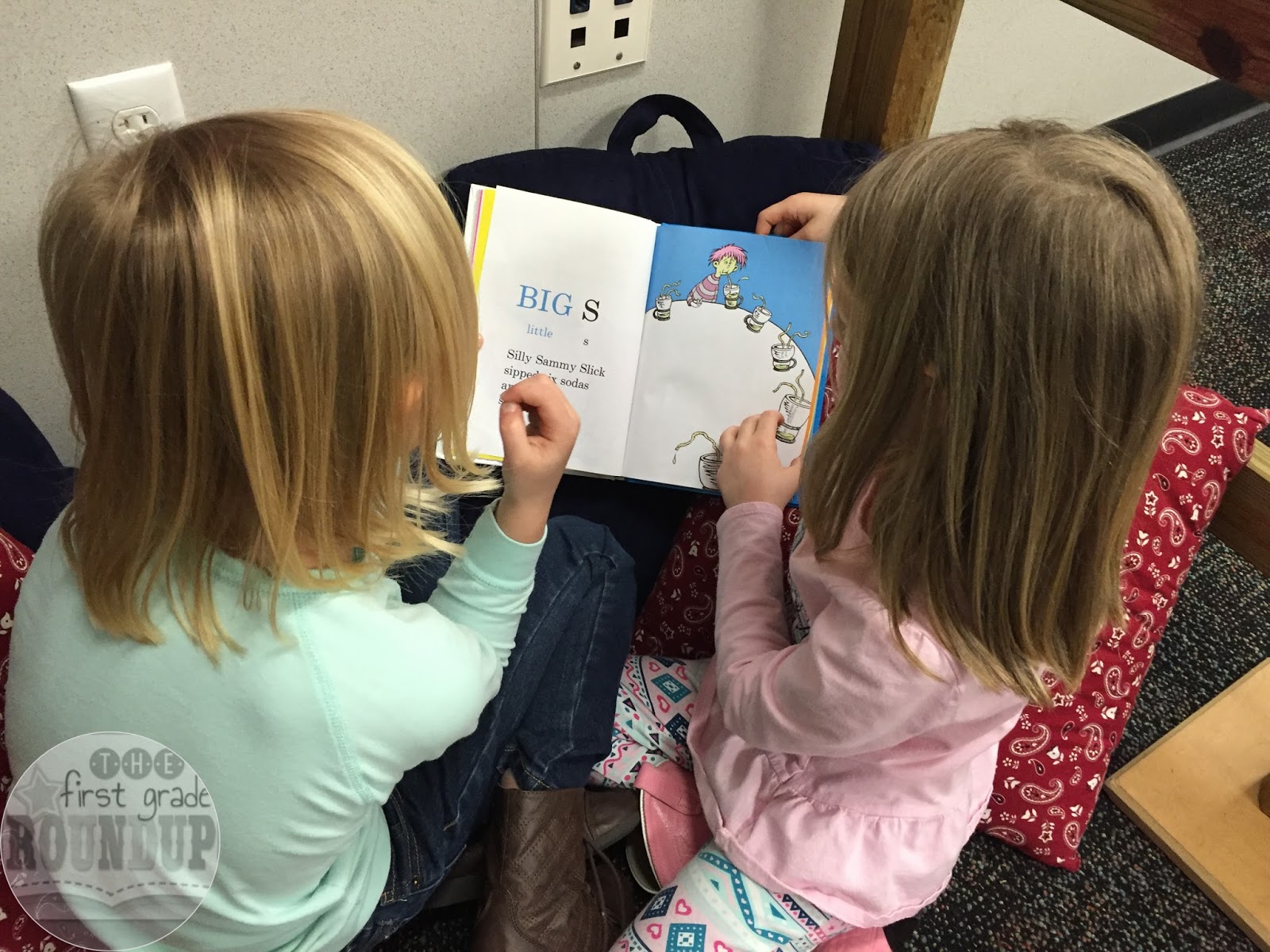
Then, during our whole group reading time, my first graders worked with a buddy to read a Dr. Seuss book together and look for nonsense words, or wacky words. We shared our wacky words during share time!
Then, we worked on reading real and wacky words from One Fish, Two Fish, Red Fish, Blue Fish and sorting them into real or wacky words. There was even a “blank” card for my first graders to make up their own wacky word–which they LOVED doing!

And on a more serious note….I really put a lot of stock into this nonsense word fluency activity this year because of my school’s focus on the DIBELS assessment. I am finding that a lot of my readers struggle to decode nonsense words. And while I used to believe that it didn’t matter because real readers need to **make sense** of words as they read anyways…
The science of reading has taught me that reading nonsense words DOES matter. As we’ve studied our newest phonics program through the help of our district literacy coach, we have found that, as readers begin reading multi-syllabic words, the syllables they have to break words into to read are often nonsense words. For example, basketball is made up of 2 nonsense words and one real word…
bas * ket * ball
In order to decode this word, the reader HAS to be able to decode nonsense words!
Since this revelation, we’ve been working more on nonsense words with these real and wacky words packet.
3. Rhyming
Rhyming books are just so fun to read! And Dr. Seuss is one of the BEST at this! We added this final type of Seusstastic writing to our Write Like Dr. Seuss anchor chart…

Then, we brushed up on our own rhyming skills during our whole group phonics time.

And next week, we will be tackling writing some poetry like Dr. Seuss!

Catch all of these Dr. Seuss writing lessons and much much more in my Dr. Seuss Week Activities Packet!
