easy routines for Using Decodable Science readers in the Classroom
We’ve talked a lot about the science of reading around here in the last few years.
We’ve chatted about why we should use decodables in the classroom, how to use decodables, and how to assess your kids’ decoding needs for small group instruction.
But what about non-fiction texts? Is there a world where good, decodable science readers and passages can exist?
YES! Let’s chat about decodable science readers and passages and how to use them in the classroom!

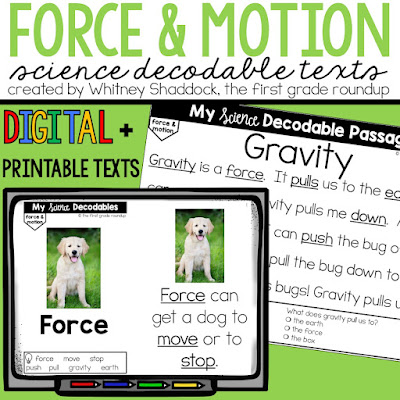
decodable Science readers and passages are exactly what they sound like. A science passage or booklet that is also decodable.
The difference is that science readers often have academic vocabulary words like force or amphibians, and those may not be decodable for the kids in our classroom or in our small group.
Practicing academic vocabulary
In traditional decodable readers, sight words are included in the front of the book or bottom of the passage to practice as heart words because they are not easily decodable.
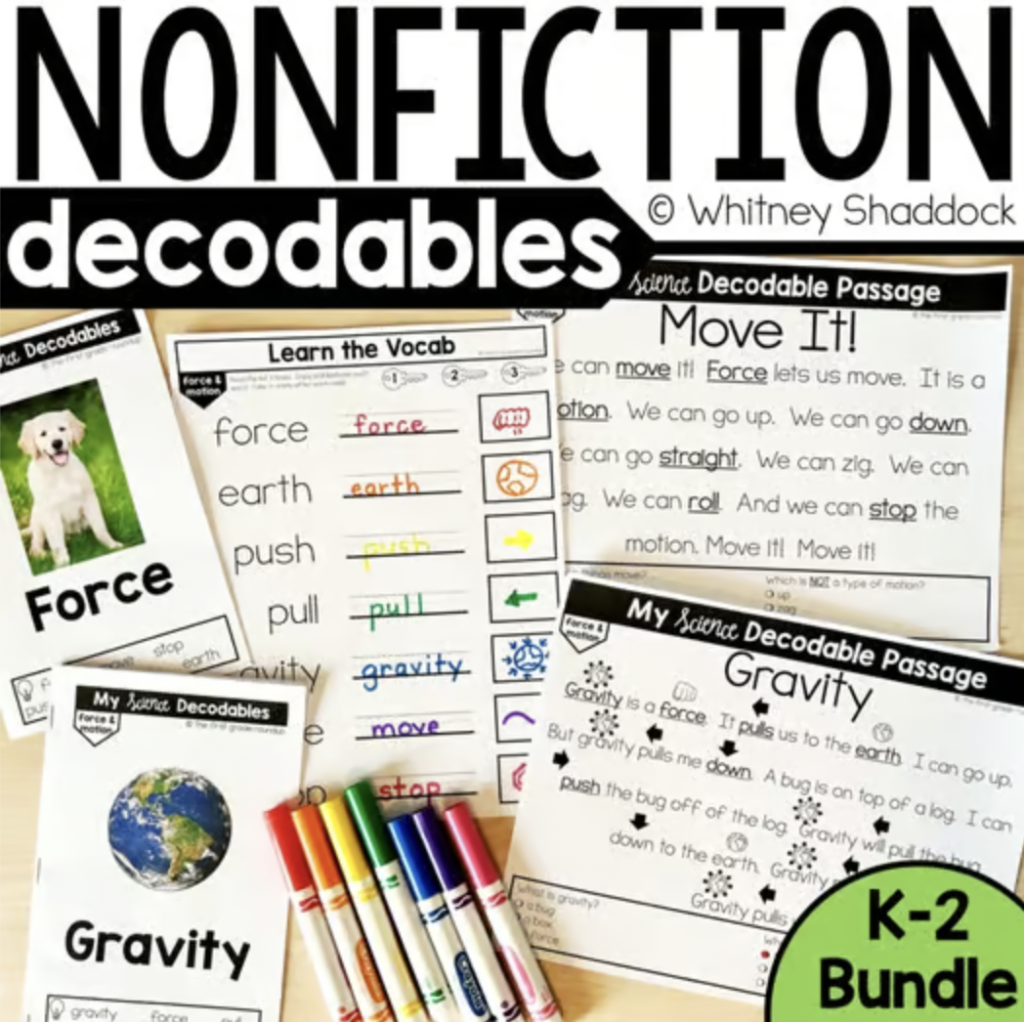
But in decodable science passages and readers, high frequency words are replaced with the academic vocabulary words that show up in the text. And each set of decodables comes with a vocab word list to practice reading before starting a text.

decodable Science readers are great for integrating literacy into science…especially during small groups!
Each set of science decodables focuses on a topic from the Next Gen Science standards for K-2. And whichever grade level the topic is for, the decodable words are written for that end of year level.
For example, the Force and Motion set of decodables are written on an end of year kindergarten decoding level because the Force and Motion science standards are part of the kindergarten Next Gen Science standards.
choosing the right decodable science passage
Once we have learned our science academic vocabulary, we are ready to tackle the non-fiction science passages or science readers.

For kids who struggle with the vocabulary words from our related science unit, I use the passages with picture clues first. These are made to give extra support for reading the vocabulary words.
They have simple pictures or symbols above the academic vocabulary words to help support reading fluency.

The kids who are doing well with the academic vocabulary words can use the decodable science passages without vocab picture clues or the science readers. In these passages and booklets, the science vocab words are bolded and underlined when they first appear… just like in a science textbook.

Read Independently
Once I have chosen which decodable text I will use, I let the kids read the decodable science passage or booklet independently. My rule of thumb is that they read it 3 times and then work on highlighting all of the academic vocabulary words while they wait.

Answering Reading Comprehension Questions
After we have read the decodable science passage or reader in our small group (or as a whole group!), we work on the reading comprehension questions. These questions are not necessarily decodable, but intended to do as a whole group or teacher-led discussion in your small group to help deepen your kids’ understanding of the science topic you are learning about!

Each set of these decodable science passages and readers includes multiple books and passages on the same strand of Next Gen Science Standards. Each book has a matching decodable science passage with and without the vocabulary symbols.
Where Can I Find These Decodable Science Readers & Passages?
You can find the Force and Motion set for kindergarten shown in this post here. And the full, K-2 bundle of science decodable readers and passages can be found here.