
Classic volcano effects science experiment for 2nd grade kids
In the last blog post I told you how earthquakes seem like the most exotic thing to this Arkansas born and raised girl.
I lied.
Volcanoes are more exotic for me. #shouldalookedahead
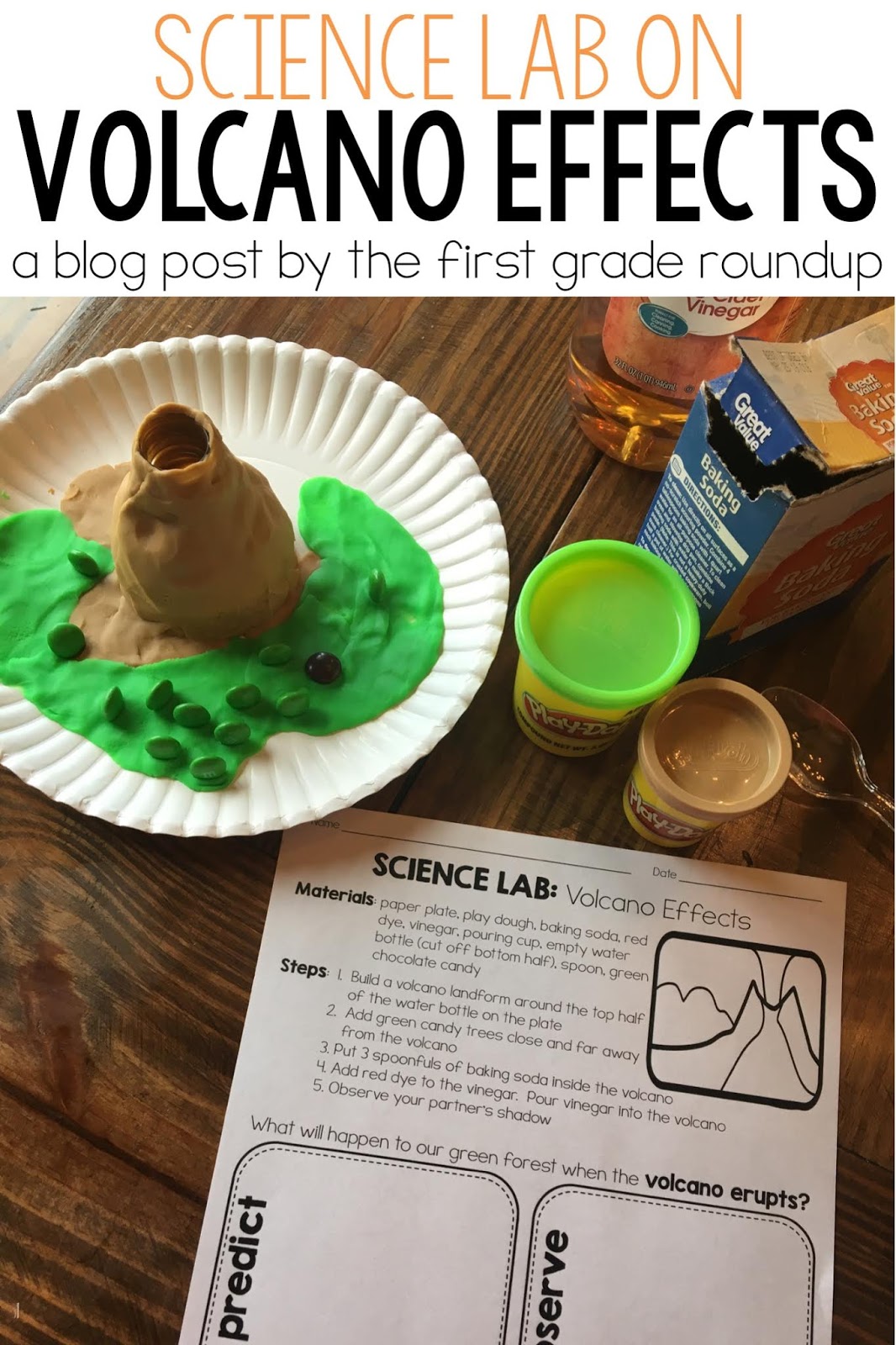
The classic volcano effects science experiment is the closest I’ve come to witnessing a volcano.
I’ve never so much as even seen a volcano–active, dormant, or extinct.
The closest thing to a volcano I’ve experienced is the baking soda and vinegar kind.
That effects of volcanoes science experiment never gets old for me. I love it every time. And so do the kids.
But for second graders, I wanted to “beef” up the classic version of the effects of volcanoes science experiment. Many kids start seeing this demonstration as preschoolers, so I didn’t want this to be the same ol’ experience.
Mainly, I wanted to make this more of a science experiment and have something to test to make it new, fresh, and challenging for older kids.
And since our focus during this 2nd grade landforms unit is to observe changes to landscapes and landforms, I wanted to tie the volcano effects science experiment into that idea.
(This post contains affiliate links to help fund my Diet Dr. Pepper addiction and support this corner of cyber space)
Volcano effects science experiment Set Up
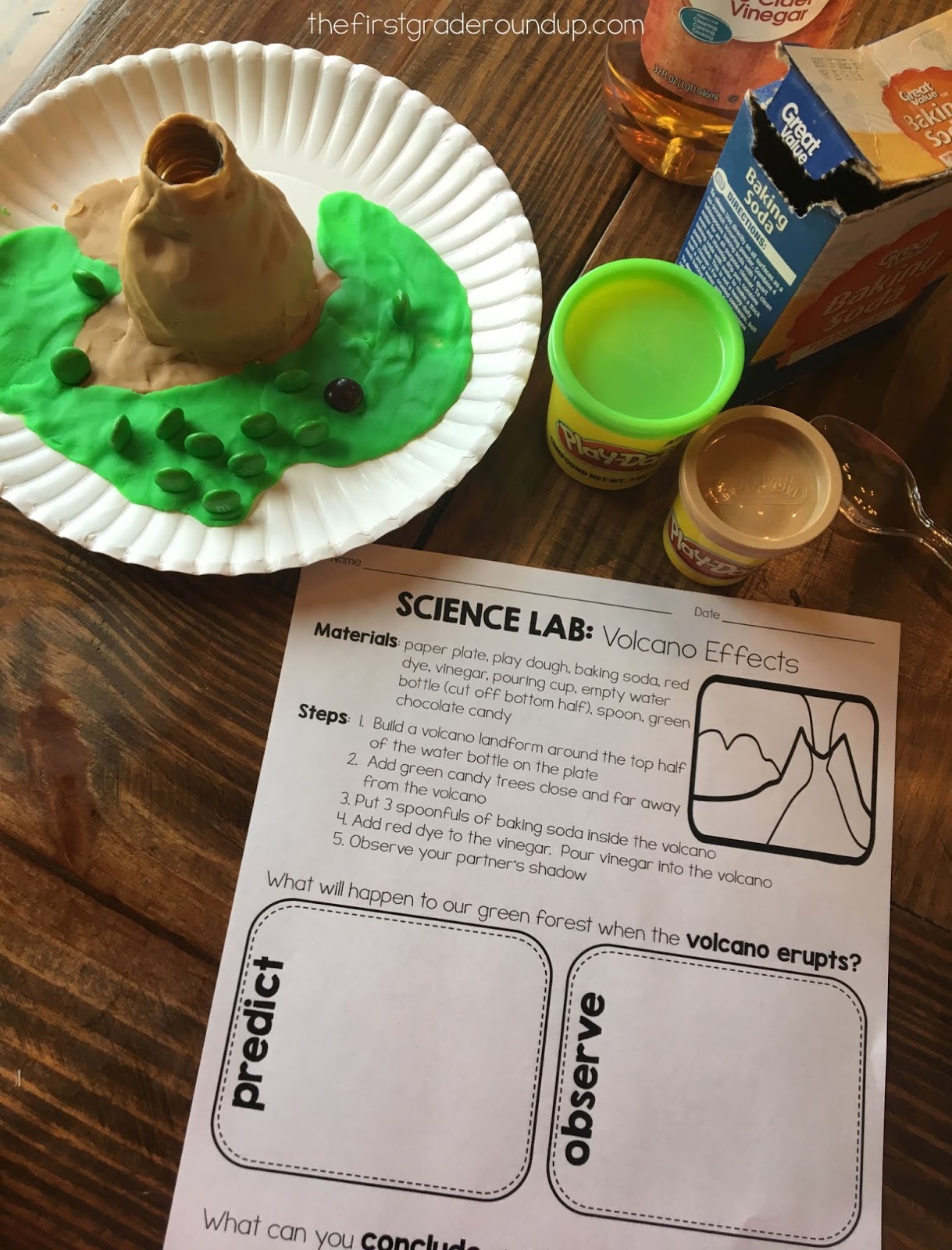
For this volcano science experiment, you will need…
- paper plates
- play-doh
- empty water bottles with the bottom half cut off
- baking soda
- vinegar
- red dye
- cups to pour
- spoons
- green M&Ms
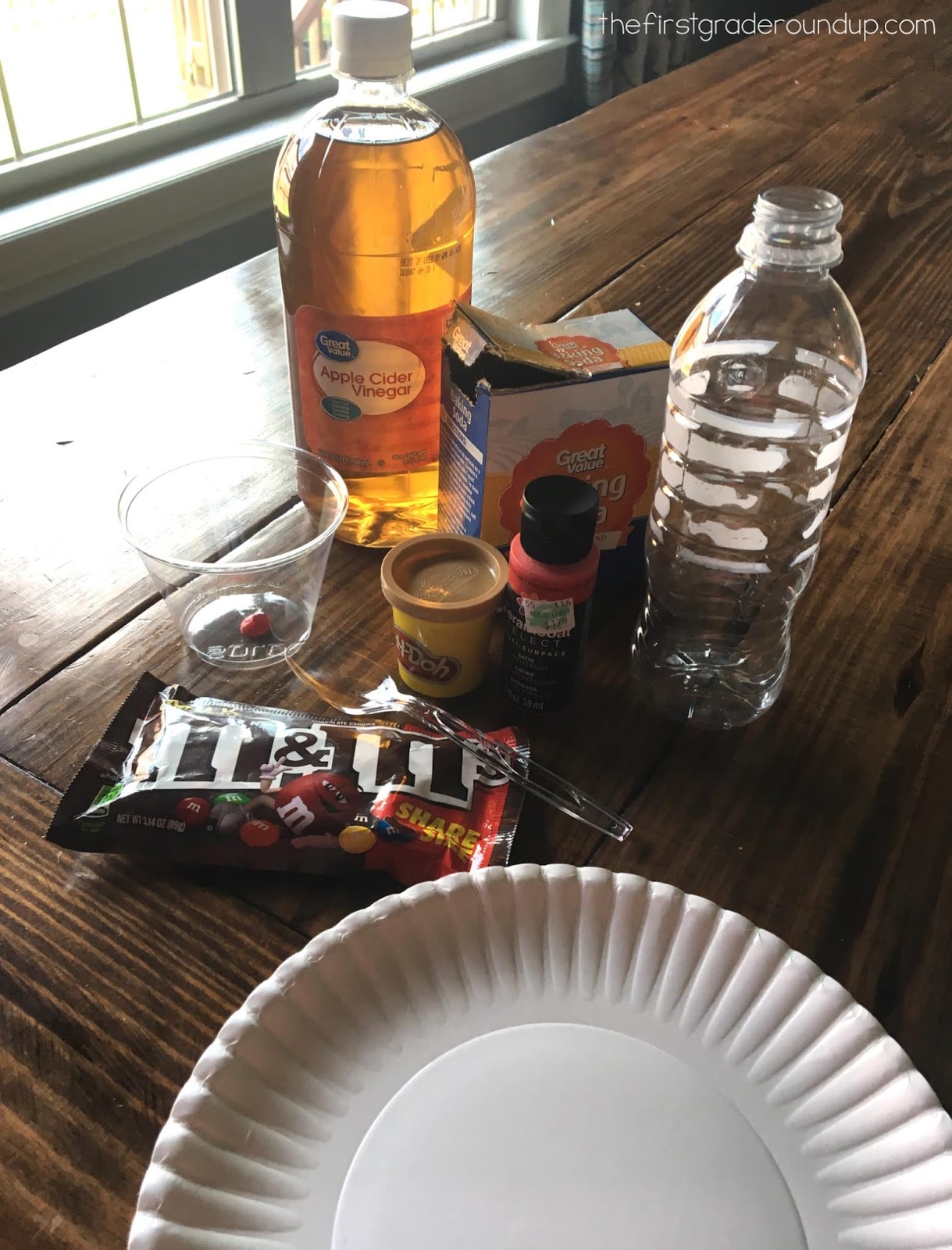
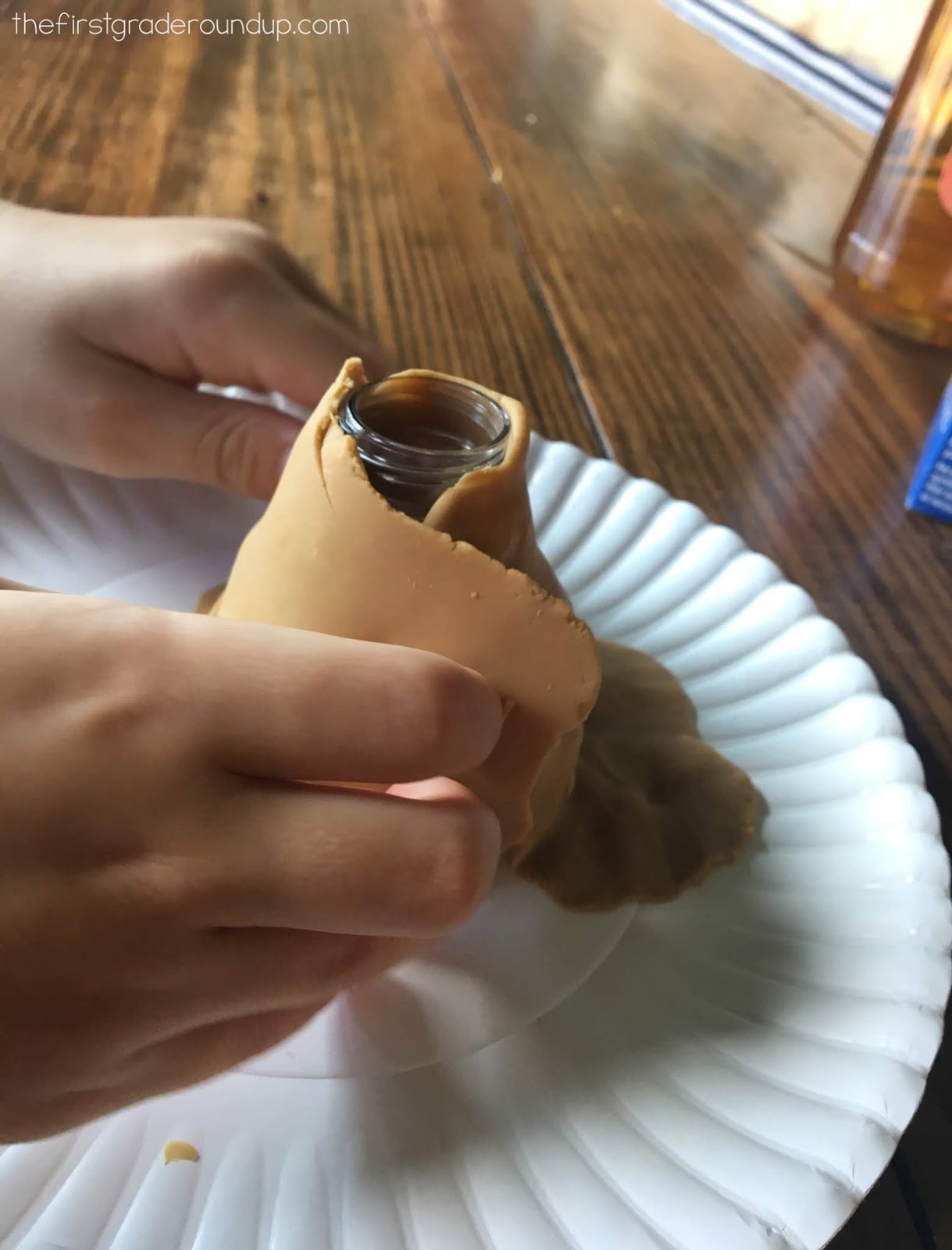
We used the top half of the empty water bottle as the volcano structure. We built a volcano mountain around the bottle with the play-doh. The volcano will sit on top of the paper plate.
Then, we designed a “forest” of green M&M trees to represent the landscape around the volcano. Have the students think about where they want to put the forest. Should it be close to the volcano? Far away? All around? And ask them to tell why they chose a specific location for the “trees.” Are they trying to test a theory?
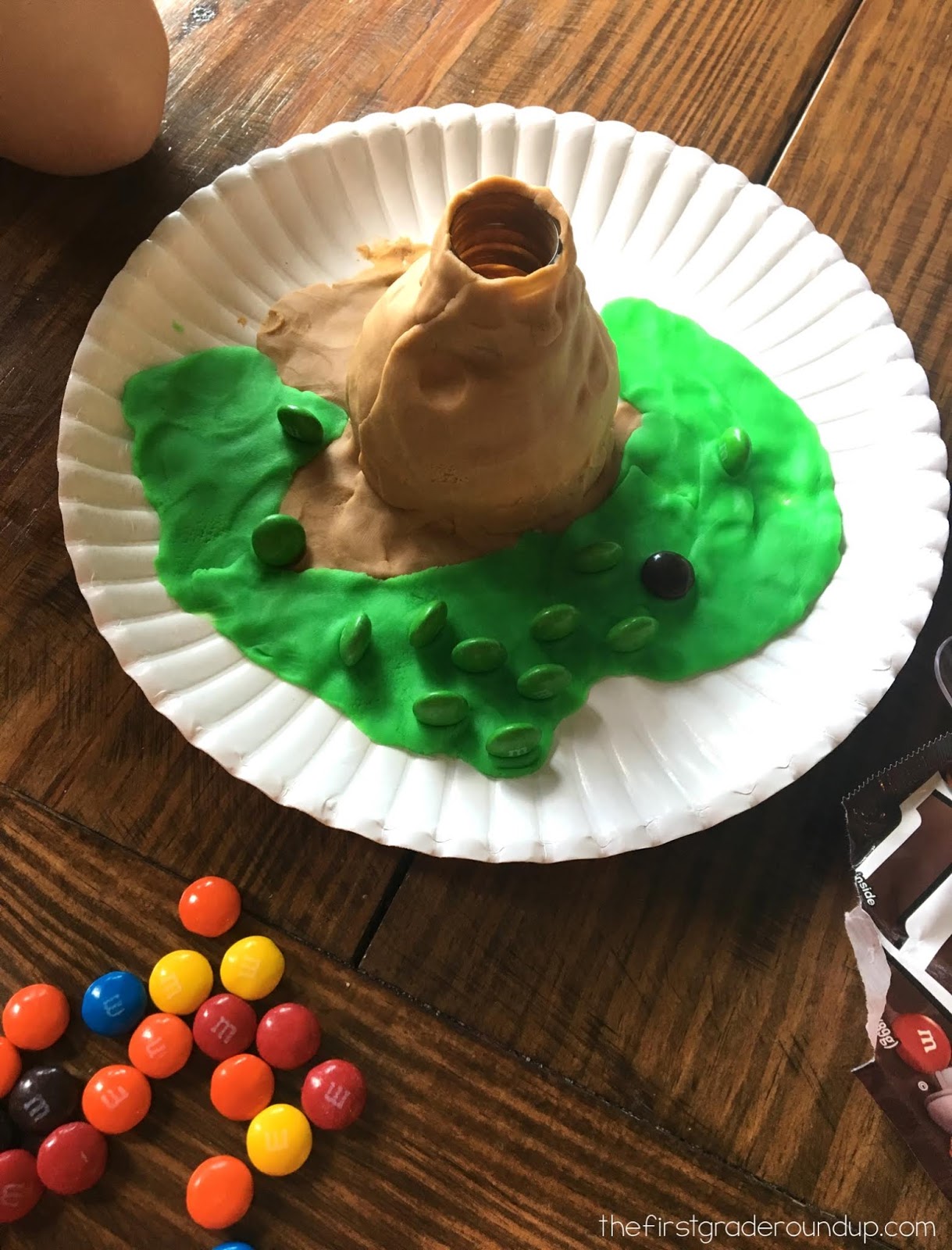
Feel free to add “buildings” with brown M&Ms or lakes with blue M&Ms, too, if you like.
But most importantly, don’t forget to sneak and eat a few M&Ms. Trust me, the volcano science experiment isn’t as fun if you don’t eat the treats! 🙂

Volcano Predictions & Observations
Once the volcanic landscape is built, we predicted the effects of the volcano. We drew a picture of what would happen when the volcano erupted. Specifically, we talked about the forest. Would the forest survive the volcano effects?
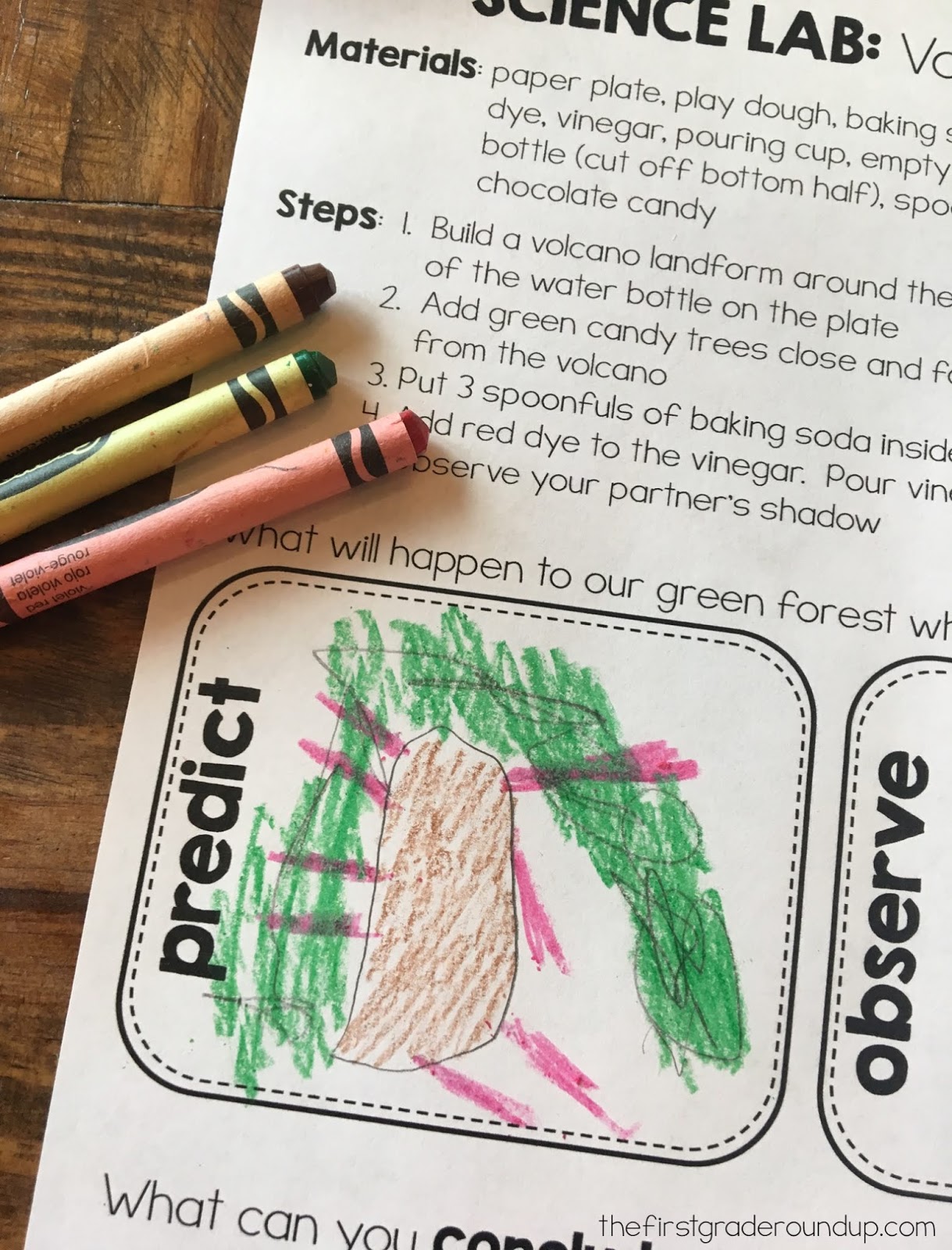
NOTE: I did this at home with my 5 year old so he just drew a picture of what the red lava might do. Second graders could easily write a sentence or two about their prediction. This is a very flexible handout.
Then, we put a spoonful of baking soda inside the water bottle…

…and poured red vinegar into the water bottle slowly while we observed the effects of volcanoes.
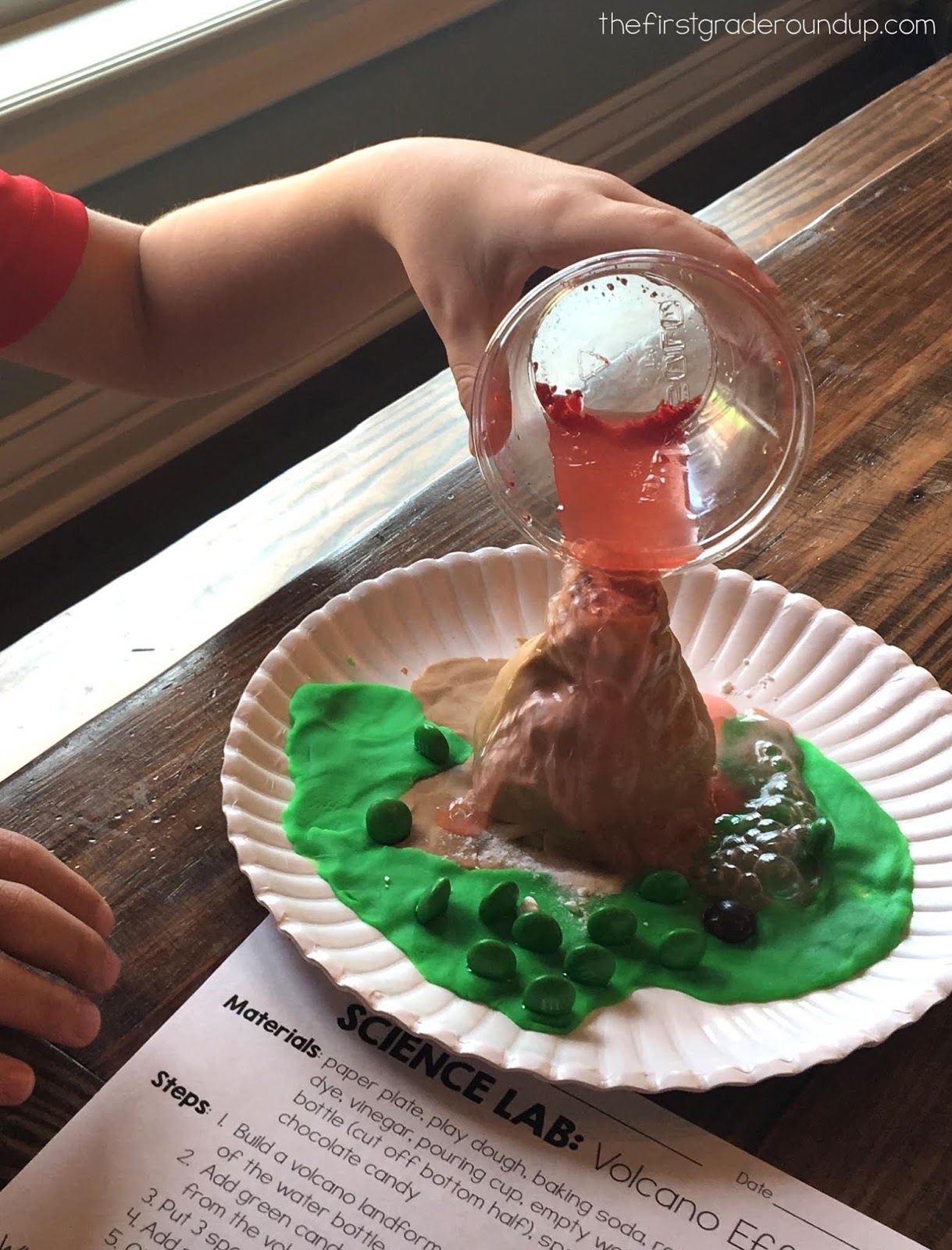
We recorded our observations.
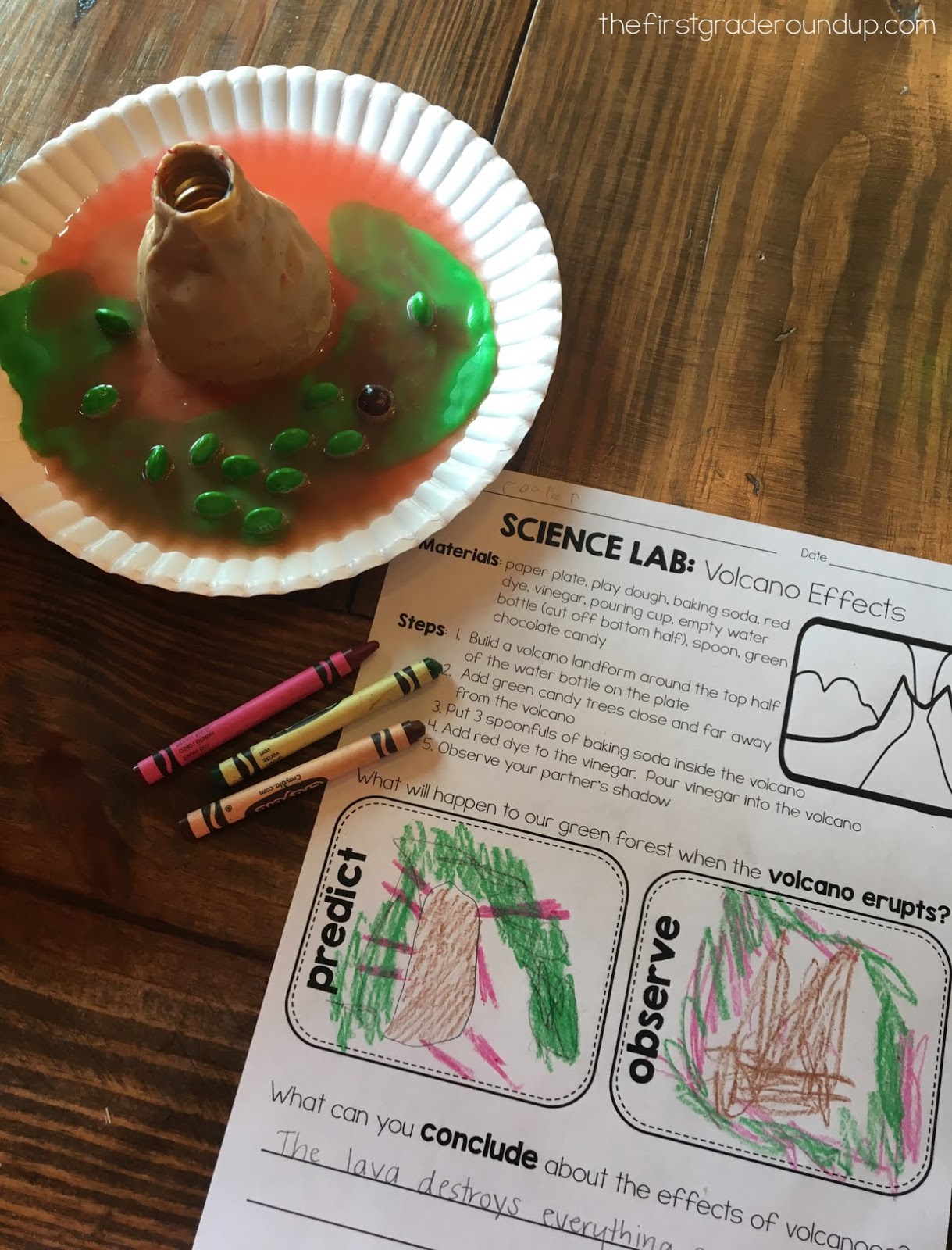
Volcano Effects
The fun thing about doing several volcanoes during your science block is that you can compare everyone’s volcano effects on each of their landforms and landscapes. Give the students time to walk around and observe everyone’s effects. Not everyone’s forests will be destroyed. Each pattern of destruction will look different. So, this makes a great conversation.
Why were some trees saved? Why were some forests completely destroyed?
After our discussion, we wrote down our conclusions about how and why our landscape changed.
You can find this volcano effects science experiment, plus much more science and STEM challenges in this 2nd grade landforms unit.
